
Resource guide forthcoming

5/27/26 Event
- Discusses how to shift from making the case for well-being to ensuring meaningful implementation and integration of well-being initiatives (i.e., “getting the work done”)
- Shares real-world examples of organizations that have successfully operationalized well-being initiatives with varying levels of programmatic support and institutional buy-in
- Explores strategies for managing competing organizational priorities, navigating large, complex networks, and building partnerships and collaborations within an organization
Featured Change Maker Accelerators & Coaches
- Jonathan Ripp, MD, MPH, Icahn School of Medicine at Mount Sinai
- Jennifer Bickel, MD, Vice President & Chief Wellness Officer, University of Texas MD Anderson Cancer Center
- Ruben Sanchez, MD, Chief Wellness Officer & Regional Assistant Medical Director, Southern California Permanente Medical Group
- Jeremy Segall, MA, RDT, LCAT, FPCC, System Chief Wellness Officer & Assistant Vice President, Human Experience, NYC Health + Hospitals
Well-being work is incredibly hard. If you feel that you’re being challenged, it is because it is challenging, and not because you are failing.
Guide Highlights
Clinician well-being is increasingly recognized as a strategic priority for health care organizations, but many well-being leaders struggle to move from making the case for well-being to embedding it into the day-to-day systems of their organizations. Establishing well-being programs is only the first step, as creating meaningful and lasting improvements requires commitment and the integration of well-being into an organization’s operations, decision-making, and culture. Without sustained action, organizations risk burnout, turnover, and missed opportunities to improve care delivery. Yet operationalizing well-being often requires navigating competing priorities, limited resources, complex organizational structures, and diverse stakeholder needs, each of which can present barriers to implementation. This resource guide highlights practical strategies and lessons from experienced well-being leaders to help organizations operationalize well-being initiatives across settings with varying levels of programmatic support and institutional buy-in.
Integrate Well-Being into Existing Organizational Priorities
Well-being becomes sustainable when it is positioned as a driver of organizational success rather than as an additional priority competing for attention.
- Make business and ethical cases for well-being by using stories alongside qualitative and quantitative data to demonstrate how well-being contributes to organizational performance, while reinforcing that supporting the workforce is both an operational necessity and the right thing to do.
- Build well-being into organizational structures and decision-making by establishing shared governance, including well-being in strategic planning discussions, and making it a standing agenda item for leadership and operational teams.
Start With What You Have and Demonstrate Value
Generating support for well-being initiatives can feel challenging when resources are limited, but meaningful progress can be made by focusing on your sphere of influence.
- Start small and demonstrate proof of concept by piloting achievable initiatives, measuring outcomes, and using early successes to build momentum, credibility, and support for future investments.
- Identify opportunities to advance well-being within your current role, relationships, and existing organizational structures instead of waiting for additional funding or staffing.
Tailor Solutions While Maintaining a Shared Vision
Different teams, professions, and work settings face unique challenges and require different supports to achieve the same organizational vision for well-being.
- Customize initiatives to fit the workforce by tailoring interventions to the different risks, responsibilities, and stressors of different roles rather than applying a one-size-fits-all approach.
- Maintain a shared vision of well-being within the organization while allowing local flexibility and empowering different departments and teams to implement strategies that best meet their needs.
Develop Shared Responsibility for Well-Being
Well-being teams can range from one dedicated leader to more than 45 full- and part-time well-being staff, demonstrating that teams of any size can build successful well-being efforts by generating buy-in and shared ownership across the organization.
- Start by building a network of champions and partners by engaging leaders and staff at every level of the organization and cultivating relationships across departments to advance shared goals.
- Build wellness literacy and shared ownership throughout the workforce by helping people understand how they can contribute to organizational well-being and communicating a clear vision that resonates with different stakeholder groups.
How Well-Being Leaders Get the Work Done
The role of a well-being leader looks different in every organization. Responsibilities vary based on an organization’s priorities, available resources, workforce needs, and the maturity of its well-being efforts. However, while specific duties differ, well-being leaders often share a common set of functions.
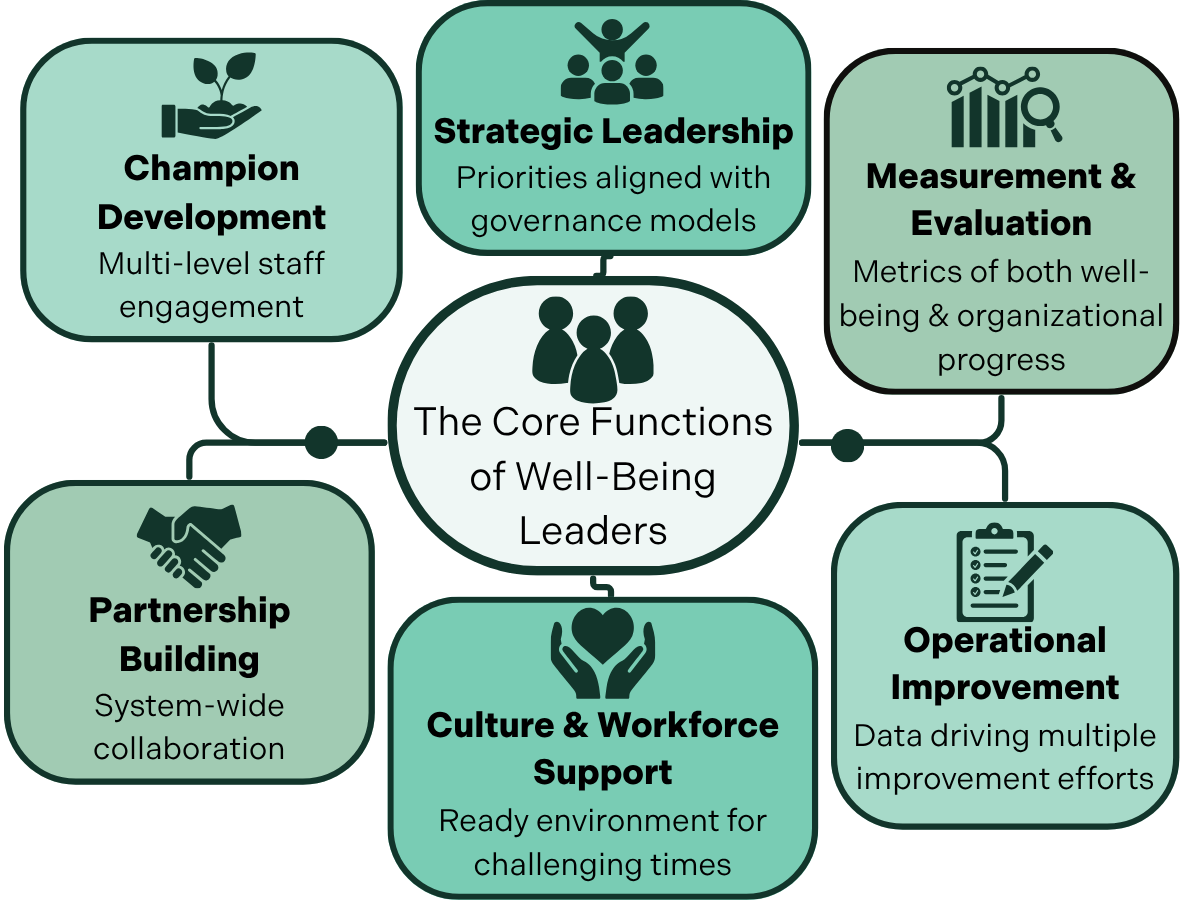
The graphic highlights the core areas of work commonly led or influenced by well-being leaders:
- Strategic Leadership
- Measurement & Evaluation
- Operational Improvement
- Culture & Workforce Support
- Partnership Building
- Champion Development