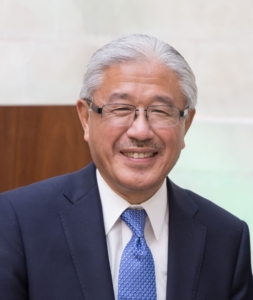
The following message was sent by Victor J. Dzau to members of the National Academy of Medicine on June 15, 2026.
Dear NAM Members,
As I conclude my 12 years as President of the National Academy of Medicine, I do so with deep gratitude for the opportunity to have served alongside you. Together, we have helped shape an institution that is stronger, more proactive, more globally engaged, and more impactful than ever.
When I arrived in 2014 at what was then called the Institute of Medicine – as successor to the incomparable Harvey Fineberg – the organization had reached a long-awaited crossroads. Within a year, we became an independent Academy alongside the National Academy of Sciences and the National Academy of Engineering. We navigated the challenges of a complex transition, developed a new organization, and established a stronger leadership platform for health and medicine within the National Academies organization.
In the years that followed, we transformed what it means for an Academy to serve. We pioneered new models for collective and global impact – including Action Collaboratives, International Commissions, Grand Challenges, and more. We focused on catalyzing change at the systems level and improving outcomes at the highest possible scale – confronting monumental challenges like the health impacts of climate change, the needs of an aging world population, global pandemics, and the crisis of substance use, to name a few. We maintained a steady focus on improving the performance of the US health system, including by supporting the wellbeing of its workforce. And amid historic breakthroughs in science and technology, we built essential policy scaffolds to ensure equitable and responsible implementation.
We have navigated extraordinary challenges. During the COVID-19 pandemic, we mobilized expertise, informed public understanding, and advanced solutions at a time of profound uncertainty. We navigated daunting societal challenges including firearm violence, racism, and access to reproductive health care. Through innovative communications and partnerships, we tackled the challenges of infodemics and the spread of inaccurate information and worked to strengthen trust in science and evidence. Amid significant political and financial pressures for research and public health, we have consistently spoken up for science, evidence-based policy making, and the broad societal benefits of sustained investment in biomedical and health research. We have never strayed from our commitment to health equity and our conviction that advancements in science, medicine, and health must be made accessible to all.
Perhaps most importantly, we have invested in the future. Through the Emerging Leaders in Health and Medicine program, established in 2016, and new and innovative fellowship models, including at the state and international level, we are cultivating a new generation of leaders who will carry our mission forward.
As I look ahead, I am convinced that the need for the trusted leadership, independent expertise, and evidence-based guidance provided by our Academy – and the broader National Academies organization – has never been greater. We are operating in a period of profound change and growing complexity. Public trust in institutions can no longer be taken for granted, while misinformation and disinformation spread at unprecedented speed and scale. Scientific and health priorities are increasingly shaped by political, social, economic, and cultural forces, often complicating the path from evidence to action. At the same time, transformative advances in artificial intelligence, biotechnology, and data science are reshaping nearly every aspect of society, creating extraordinary opportunities alongside significant ethical, societal, and security considerations.
In this context, we must ask ourselves several fundamental questions: How do we maintain independence and credibility? How do we demonstrate value in a more skeptical and divided society? How do we ensure that scientific and technological advances improve lives broadly rather than deepen disparities? And how do we continue to earn the trust of the communities we seek to serve?
In tackling these questions, several priorities will be especially important, but above all else, the Academy must remain a champion and leader for scientific integrity, evidence, and health equity. In doing so, it will be important to strengthen our ability to communicate clearly, rapidly, and effectively across a changing media and information landscape. We must continue to cultivate diverse, engaged, and forward-looking leadership among our members, fellows, scholars, and staff. We should continue to guide the development of emerging technologies and ensure that innovation advances the public good. And we should remain not only a national organization, but also a globally minded one prepared to address challenges that cross disciplines, sectors, and borders.
For decades we have used this quote from Goethe in the frontmatter of our reports: “Knowing is not enough; we must apply. Willing is not enough; we must do.” I trust that the NAM will continue to demonstrate not only that we produce rigorous, evidence-based guidance, but also that our work drives meaningful impact across policy, practice, and population health.
One of the greatest privileges of my tenure has been the opportunity to learn from and work alongside a truly remarkable community. I have been continually inspired by the dedication, vision, passion, and generosity of NAM members and staff. The pervasive spirit of collaboration, service, and shared commitment to a better future – unmatched by any institution in my experience – is among our greatest strengths and a vital source of courage, hope, and perseverance.
The challenges ahead are significant. Yet, if my time at the NAM has taught me anything, it is that this community will rise to meet them. Thank you for your partnership, your friendship, and your dedication to this mission. I leave with immense pride in what we have accomplished together and great confidence in what the NAM will achieve under the leadership of Monica Bertagnolli.
With deepest gratitude,
Victor J. Dzau, MD
President, National Academy of Medicine
June 2026