 Category: Reusable Medical Textiles
Medical textiles include single-use products made from polyester and polypropylene and reusable products made from cotton or cotton-polyester blends. Surgical gowns are a typical product in this category; other common products include drapes, wound dressings, and linens. Products are manufactured, sterilized, individually packaged, boxed, and shipped in bulk by truck, train, or cargo ship.
This brief summarizes a carbon footprinting study of a single-piece, long-sleeved, size x-large surgical gown used in an operating room in the US to identify typical hotspots and potential interventions to decrease product emissions.
Carbon Emissions Across Life Cycle
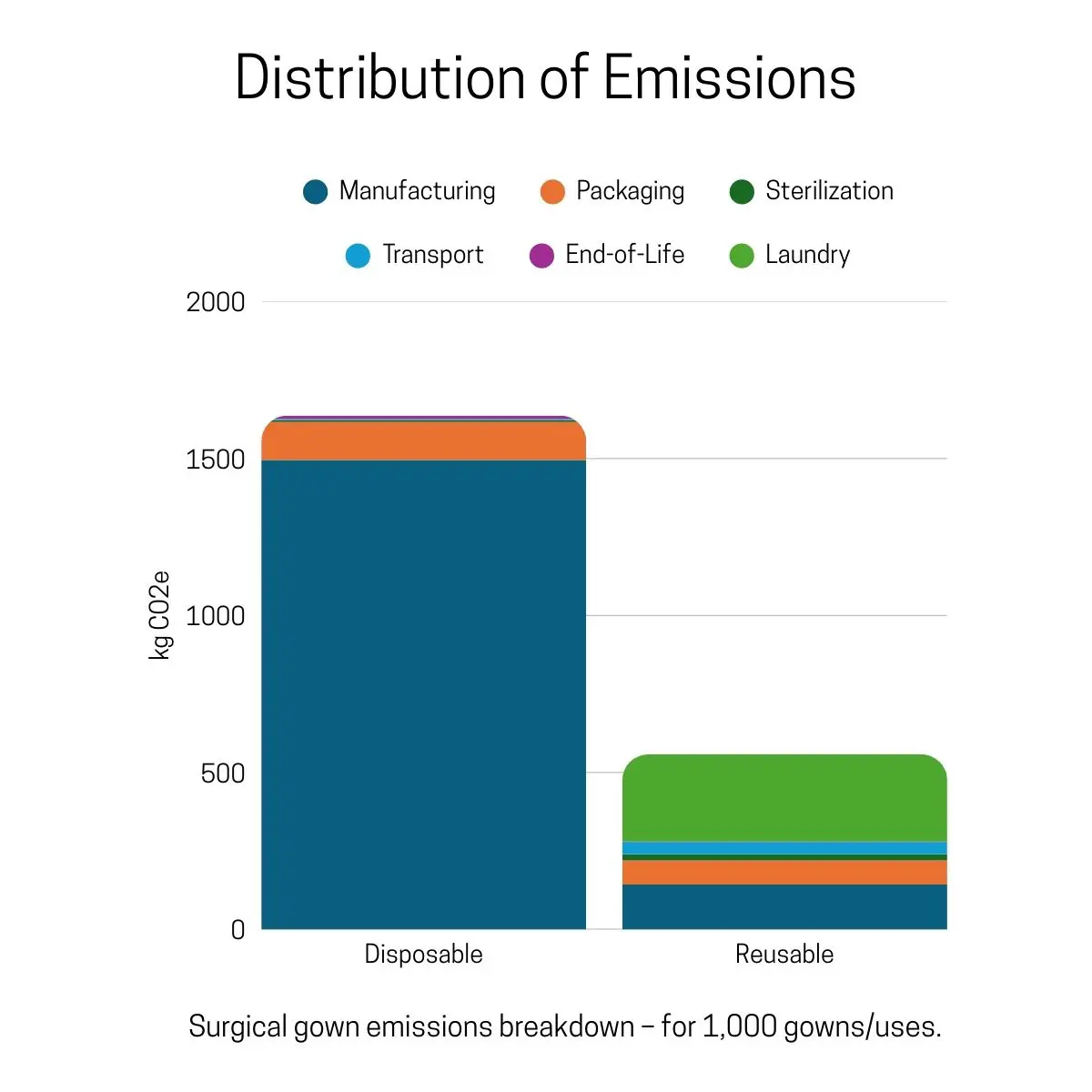
The major hotspot for disposable surgical gowns is manufacturing, especially nonwoven fabrics (polyester, polypropylene). Sterilization and transportation make negligible contributions. Gowns are assumed to be landfilled at end-of-life and use of the product has no associated emissions.
The major hotspot for reusable gowns is laundering, followed by manufacturing. End-of-life makes negligible contributions to the overall life cycle emissions.