
Addressing Major Sources of Carbon Emissions for Labor and Delivery Custom Packs
Category: Custom Packs
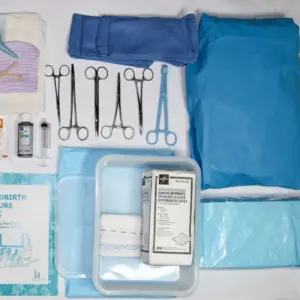
Custom packs are a set of sterile, disposable products pre-packaged for a specific procedure according to clinician or medical department specifications. Once a custom pack is opened, all items are typically disposed of, regardless of whether they were used in the procedure or not. For this reason, optimizing custom pack contents to reduce waste has been a focus of clinical sustainability efforts. A custom pack for delivering a child is a common product in this category; other products include various surgical kits and PPE kits. This brief summarizes a carbon footprinting study of custom packs for vaginal births in the US.
Carbon Emissions Across Life Cycle
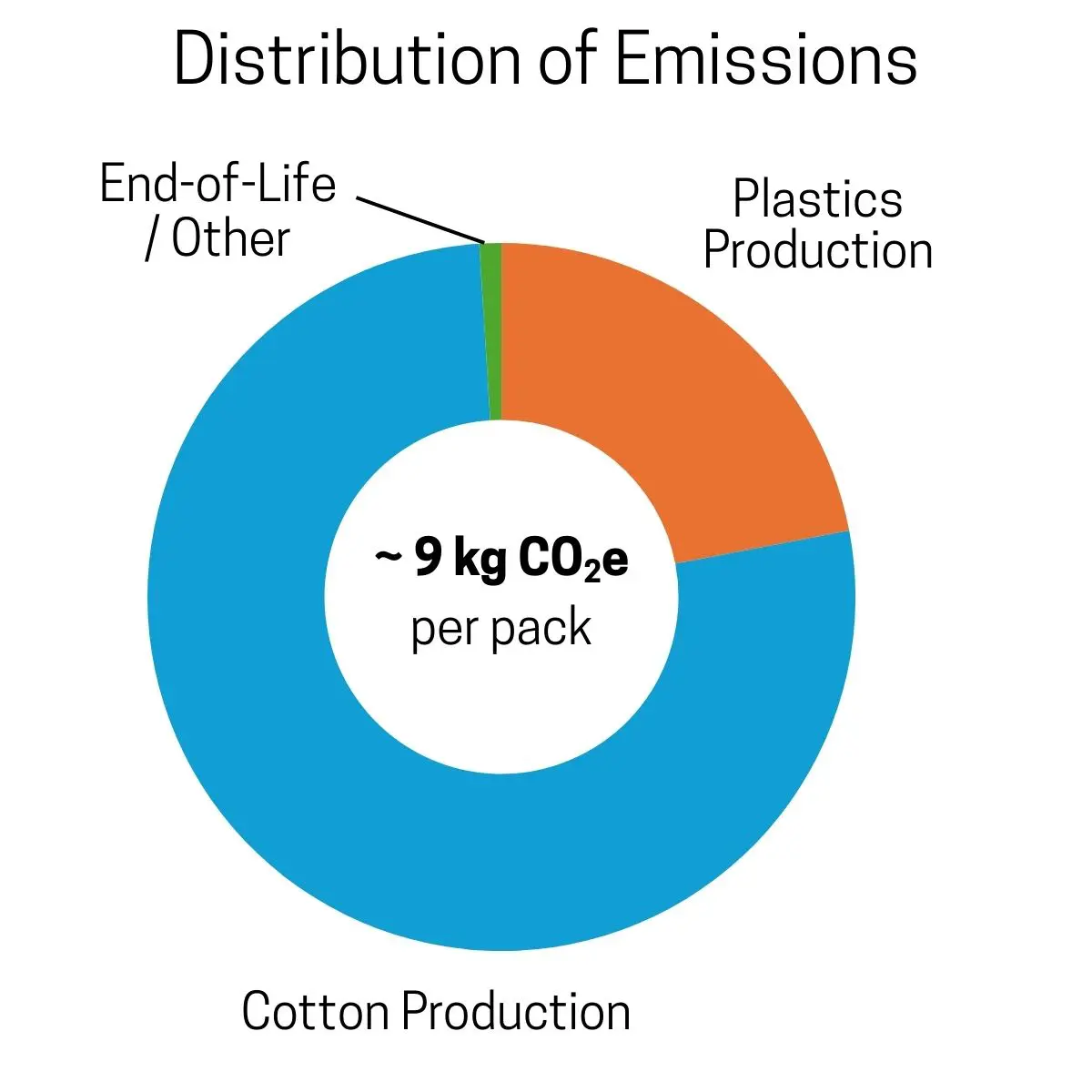
The major hotspot for disposable custom packs is cotton production, specifically disposable cotton towels, followed by plastics production. This breakdown assumes all products are landfilled as municipal solid waste. If cotton products are cleaned, demand for new products is reduced and greenhouse gas emissions decrease by almost 30%. Transportation, packaging, and end-of-life stages make minor contributions, less than 1% each.

Focusing on Carbon Hotspots
The most impactful interventions focus on reducing unused products and reusing cotton products in disposable custom packs for child delivery. Based on these results, specific suggestions for different stakeholders include:
1. Streamline custom packs to reduce waste:
⚙ ⛨ Build consensus among clinicians to standardize custom packs to the most commonly used items, adding individually packaged items as necessary for specific cases.
2. Reduce the amount of cotton products in custom packs:
⛨ Choose cotton linens that are not over-sized.
⛨ Clean sterile cotton towels in-house and reuse for another purpose.
3. Consider reusable components in custom packs:
⚙ ⛨ While not explicitly considered in this study, splitting custom packs between supplies that have reusable options and those that must remain disposable can allow for in-house reuse of some components, thus avoiding manufacturing and transportation emissions.
Audience Key: ⛨ Clinicians | ☑ Administration | ⚙ Manufacturers | $ Procurement | ⛑ Regulators
Reference: Campion et al. 2015. “Sustainable Healthcare and Environmental Life-Cycle Impacts of Disposable Supplies: A Focus on Disposable Custom Packs.” Journal of Cleaner Production 94: 46–55.
Related Products