Addressing Major Sources of Carbon Emissions for Disposable Blood Pressure Cuffs

Category: Single-Use Medical Devices

Single-use medical devices include a broad variety of products that are commonly made from plastics and packaged in plastic film and coated paper. Some single-use devices and components require sterilization during manufacturing. After packaging, products are boxed and shipped in bulk by truck, train, or ship; air transport is unusual.

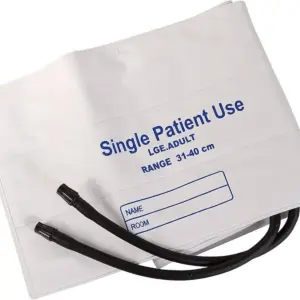
Disposable blood pressure cuffs are a typical product in this category. Other common devices include catheters, pulse oximeters, and speculums. This brief summarizes a carbon footprinting study of adult-size cuffs used in outpatient clinics in the United States to identify typical hotspots and potential interventions to decrease product emissions.

Carbon Emissions Across Life Cycle

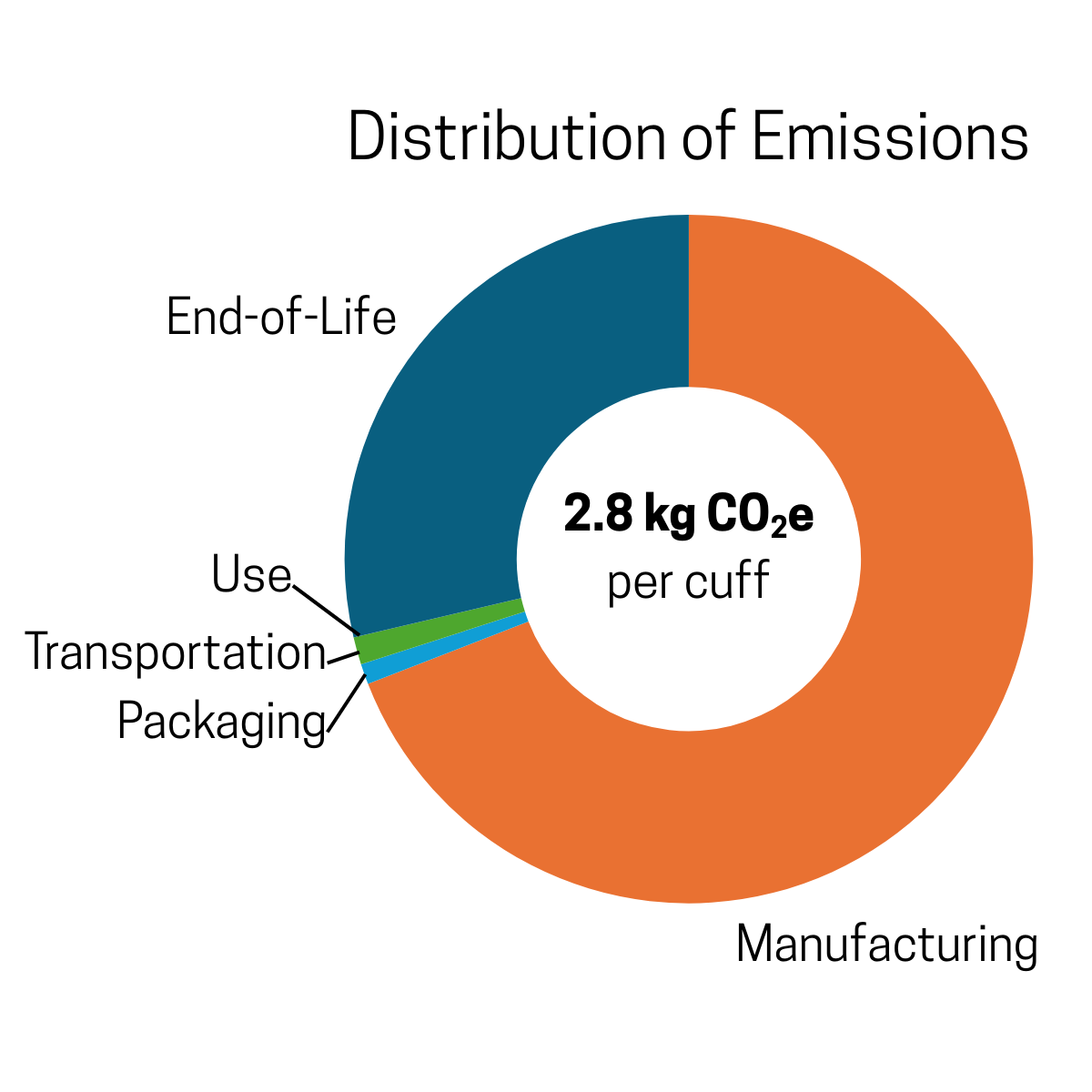
The major hotspot for disposable blood pressure cuffs is in manufacturing, especially of the synthetic fabric material. In the referenced study, cuffs are assumed to be incinerated at end-of life, contributing nearly one-third of its total carbon emissions. If cuffs are landfilled instead, the end-of-life emissions decrease by 95%. Packaging and transportation make small contributions, and product use has no associated emissions when cuffs are used manually to take blood pressure. 
Focusing on Carbon Hotspots

The most impactful interventions focus on improving product design and manufacturing of disposable blood pressure cuffs. Based on these results, specific suggestions for different stakeholders include:

1. Extend the use of blood pressure cuffs:
Assign single-use cuffs to stay with patients during inpatient stays.
$ Procure and use reusable alternatives that can be readily cleaned.

2. Reduce emissions associated with materials:
$ Design with paper-based textiles and/or procure low-carbon synthetic fibers from suppliers.
⚙ Redesign product where possible to reduce overall material requirements while maintaining its intended use.

3. Decarbonize the manufacturing process:
⚙ Procure renewable electricity for manufacturing operations.
Optimize cutting and forming processes to reduce waste material.

Audience Key:  Clinicians | ☑  Administration | ⚙ Manufacturers | $ Procurement | ⛑ Regulators


Reference: Sanchez et al. 2020. “Environmental and Economic Comparison of Reusable and Disposable Blood Pressure Cuffs in Multiple Clinical Settings.” Resources, Conservation and Recycling 155: 104643.

This resource was prepared by Mathew Eckelman (Northeastern University) and Nazneen Rahman (Sustainable Medicines Partnership), who are members of the Health Care Supply Chain Working Group of the NAM Climate Collaborative; and reviewed by members of the Collaborative. Statements in this resource do not necessarily reflect the views of all members of the Climate Collaborative; the NAM; or the National Academies of Sciences, Engineering, and Medicine (National Academies). The resource is intended to help inform and stimulate discussion. It is not a report of the NAM or the National Academies. Copyright by the National Academy of Sciences. All rights reserved.
Secret Link