This commentary supports “Toward a National Health Digital and Data Architecture: Laying the Foundation for Digital Transformation” by Abernethy et al., a product of the NAM Commission on Investment Imperatives for a Healthy Nation.
American health care is undergoing revolutionary transformation in the digitization of data collection and related analytic and use processes. For example, the Health Information Technology for Economic and Clinical Health (HITECH) Act catalyzed near-universal electronic health record adoption (Blumenthal, 2011). Likewise, the 21st Century Cures Act established frameworks to combat information blocking (ONC, 2020). Furthermore, Fast Healthcare Interoperability Resources (FHIR) standards now enable data exchange through frameworks such as Substitutable Medical Applications and Reusable Technologies (SMART) on FHIR, Bulk FHIR, and the Trusted Exchange Framework and Common Agreement (TEFCA), resulting in millions of daily transactions (ONC, 2024). These developments enable standardized, scalable data exchange across health systems, including patient access to their own data. The authors agree that the next phase of developments will require a cohesive digital and data architecture that enables a learning health system in which data, evidence, and clinical care are continuously connected.
A cohesive digital and data architecture is foundational to a learning health system. A learning health system is one in which science, informatics, incentives, and culture are aligned to enable continuous improvement, with knowledge generated through clinical care and rapidly reintegrated into practice. This requires more than the ability to exchange data. It depends on reliable data flows, shared standards, and systems designed for feedback, adaptation, and trust in real time. Without an underlying architecture that supports these functions, insights may remain siloed, learning cycles may slow, and opportunities to improve outcomes, equity, and efficiency may be lost. With it, health care can move toward a system in which evidence generation and care delivery are seamlessly connected.
What Architecture Provides
Flexible architecture that supports interoperability and the sharing of reliable, verifiable data is an essential prerequisite for the nation’s health and health care goals. Other industries demonstrate this advantage. For example, home construction organizes around foundations, framing, plumbing, electrical systems, and heating, ventilation, and air conditioning—each is a subindustry with standards enabling market-wide innovation. Likewise, the architecture of global telecommunications enables seamless worldwide connectivity while supporting continuous evolution. Furthermore, the architecture of financial systems allows for credit cards to work anywhere while maintaining security and oversight.
The authors share the perspective that health care currently lacks this maturity. Most systems deploy customized infrastructures with few common patterns, creating barriers to innovation, coordination complexity, misaligned incentives, and leadership gaps. A robust architecture would establish common protocols, define modularity boundaries, give purpose to interoperability standards, and enable data liquidity, artificial intelligence (AI) readiness, and user-centered design.
As a starting point for discussion, Figure 1 presents a proposed health digital and data architecture. Structurally, this proposed architecture takes the form of a “technology stack.”
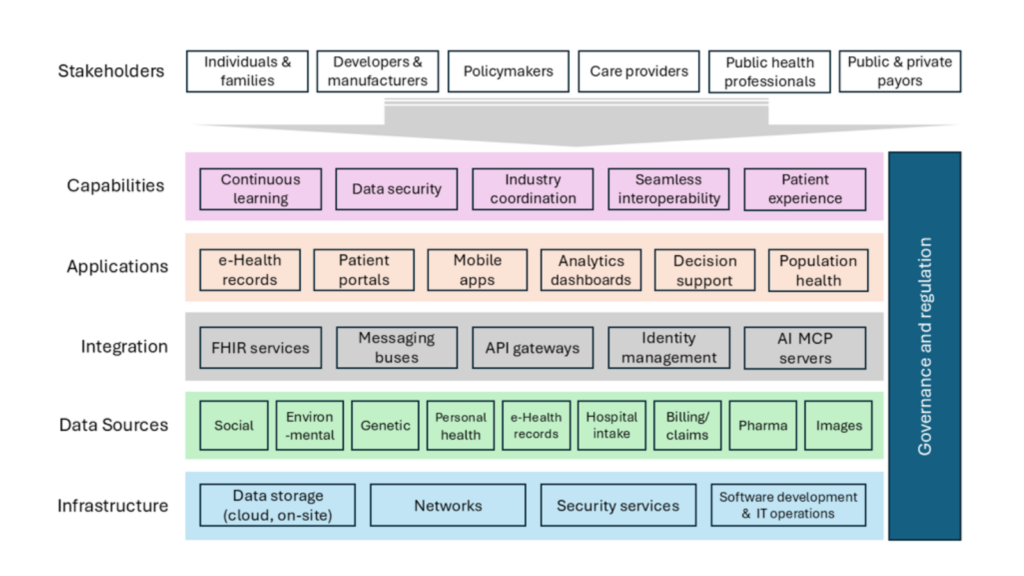
Figure 1 | Health Digital and Data Architecture Conceptual Framework
SOURCE: Adapted from Abernethy, A., N. Afsar, B. Anderson, W. Barfield, M. Bharel, J. Brown, P. Embí, A. Eschenlauer, W. Gordon, S. Gregurick, B. James, A. Jena, P. Lee, T. Maddox, K. Mandl, R. Parikh, L. Petersen-Lukenda, T. Sarich, A. Shaikh, P. Speyer, and K. Yale. 2026. Toward a national health digital and data architecture: Laying the foundation for digital transformation. NAM Perspectives. Discussion Paper, National Academy of Medicine, Washington, DC. https://doi.org/10.31478/202603b.
NOTE: FHIR = Fast Healthcare Interoperability Resources; API = application programming interface; MCP = model context protocol.
The AI Imperative
Exploring the potential of AI to improve health, medicine, and biomedical sciences has rendered obvious the structural flaws in current digital architecture. The authors believe that AI promises to revolutionize clinical decision support, drug discovery, diagnostics, precision medicine, and precision public health. Early results are striking: AI-enhanced electrocardiograms have detected atrial fibrillation with 83 percent accuracy in asymptomatic patients; machine learning has identified heart failure readmissions earlier; and deep learning has achieved 95 percent accuracy in diabetic retinopathy screening (Attia et al., 2019; Kessler et al., 2023; Rajesh et al., 2023).
However, AI systems require more than data availability. They also need organization, quality, consistency, sharing protocols, and computability across the entire ecosystem. Today’s fragmented ecosystem severely limits AI’s potential. For example, hospitals produce 50 petabytes of data annually, yet only 3 percent of this data are used for analytics or care coordination (World Economic Forum, 2019; Moore and Guichot, 2024). AI models trained on one system may fail when deployed in another. Without coherent architecture, the industry risks the development of an AI ecosystem that is as fragmented as the current infrastructure, limiting innovation and perpetuating disparities.
The Path Forward
The authors agree that converging forces demand immediate action. This action requires the convening of stakeholders to develop a consensus on architectural principles; focused governance that prioritizes foundational interoperability requirements; strategic investment in national infrastructure; workforce development; patient empowerment over their health information; and accountability mechanisms for AI safety and interoperability. The groundwork for this shift is already being laid through efforts such as the Centers for Medicare & Medicaid Services (CMS) Health Technology Ecosystem initiative and the associated group of aligned networks (CMS, 2026). Aligning a mature, public and private, fully interoperable, and securely governed national data architecture with the CMS initiatives to modernize and strengthen the digital health ecosystem would create powerful synergies across thousands of organizations nationwide.
A focused set of levers can drive alignment and accelerate progress toward a national digital and data architecture (Abernethy et al., 2026). These levers promote regulatory simplification and alignment across federal agencies, prioritize a small set of foundational interoperability capabilities, require stronger accountability for data sharing and performance, and empower patients to access and direct the use of their data. They also entail coordinated public and private investment in infrastructure, workforce development, and digital literacy, alongside responsible integration of AI into clinical workflows with continuous monitoring for safety and effectiveness. Taken together, these levers reflect a shift from fragmented, organization-specific solutions toward a more coherent and scalable ecosystem. They provide both a practical roadmap for action and a clear invitation to engage more deeply with the full set of priority actions (Abernethy et al., 2026).
Health care stands at a crossroads. As the system builds on substantial gains in interoperability, the circumstances are now in place to address fragmentation through a coherent and interoperable digital architecture. A broadly engaged convening of stakeholders across industry, academia, and government will be essential to accelerate progress. Without architectural coherence, the digital health ecosystem will become more complex and fragmented even as it advances. With it, health care can realize a learning health system that continuously improves, reduces waste, advances equity, and enables the effective use of AI to transform care. The foundation has been laid. The opportunity is here. The question is whether all stakeholders will achieve the collective action required to seize it.
Join the conversation!

New from #NAMPerspectives: The Missing Foundation: Why Digital Architecture Must Be Health Care’s Next Priority
Read the commentary: https://doi.org/10.31478/202608a
—–
“The foundation has been laid. The opportunity is here. The question is whether all stakeholders will achieve the collective action required to seize it.” A new #NAMPerspectives commentary discusses why a coherent digital architecture is critical to transforming the health care system and improving care.
More: https://bit.ly/3TZMEsb
References
Abernethy, A., N. Afsar, B. Anderson, W. Barfield, M. Bharel, J. Brown, P. Embí, A. Eschenlauer, W. Gordon, S. Gregurick, B. James, A. Jena, P. Lee, T. Maddox, K. Mandl, R. Parikh, L. Petersen-Lukenda, T. Sarich, A. Shaikh, P. Speyer, and K. Yale. 2026. Toward a national health digital and data architecture: Laying the foundation for digital transformation. NAM Perspectives. Discussion Paper, National Academy of Medicine, Washington, DC. https://doi.org/10.31478/202603b.
Attia, Z. I., P. A. Noseworthy, F. Lopez-Jimenez, S. J. Asirvatham, A. J. Deshmukh, B. J. Gersh, R. E. Carter, X. Yao, A. A. Rabinstein, B. J. Erickson, S. Kapa, and P. A. Friedman. 2019. An artificial intelligence-enabled ECG algorithm for the identification of patients with atrial fibrillation during sinus rhythm: A retrospective analysis of outcome prediction. The Lancet 394(10201):861-867. https://doi.org/10.1016/s0140-6736(19)31721-0.
Blumenthal, D. 2011. Implementation of the federal health information technology initiative. New England Journal of Medicine 365(25):2426-2431. https://doi.org/10.1056/NEJMsr1112158.
CMS (Centers for Medicare & Medicaid Services). 2026. Health technology ecosystem. Available at: https://www.cms.gov/priorities/health-technology-ecosystem/overview (accessed April 24, 2026).
Kessler, S., D. Schroeder, S. Korlakov, V. Hettlich, S. Kalkhoff, S. Moazemi, A. Lichtenberg, F. Schmid, and H. Aubin. 2023. Predicting readmission to the cardiovascular intensive care unit using recurrent neural networks. Digital Health 9. https://doi.org/10.1177/20552076221149529.
Moore, J., and Y. D. Guichot. 2024. “How to harness the power of health data to improve patient outcomes.” World Economic Forum Annual Meeting. World Economic Forum. January 5, 2024. https://www.weforum.org/stories/2024/01/how-to-harness-health-data-to-improve-patient-outcomes-wef24/.
ONC (Office of the National Coordinator for Health Information Technology, Department of Health and Human Services). 2024. “Health Data, Technology, and Interoperability: Trusted Exchange Framework and Common Agreement (TEFCA).” Federal Register, 89 FR 101722, December 16, 2024. Available at: https://www.federalregister.gov/documents/2024/12/16/2024-29163/health-data-technology-and-interoperability-trusted-exchange-framework-and-common-agreement-tefca (accessed April 24, 2026).
ONC. 2020. “21st Century Cures Act: Interoperability, Information Blocking, and the ONC Health IT Certification Program.” Federal Register, 85 FR 25642, May 1, 2020. Available at: https://www.federalregister.gov/documents/2020/05/01/2020-07419/21st-century-cures-act-interoperability-information-blocking-and-the-onc-health-it-certification (accessed April 24, 2026).
Rajesh, A. E., O. Q. Davidson, C. S. Lee, and A. Y. Lee. 2023. Artificial intelligence and diabetic retinopathy: AI framework, prospective studies, head-to-head validation, and cost-effectiveness. Diabetes Care 46(10):1728-1739. https://doi.org/10.2337/dci23-0032.
World Economic Forum. 2019. “4 ways data is improving healthcare.” Global Innovation Index. December 5, 2019. https://www.weforum.org/stories/2019/12/four-ways-data-is-improving-healthcare/.


The Missing Foundation: Why Digital Architecture Must Be Health Care’s Next Priority
Aneesh Chopra
Peter Embí
John Halamka
Rowland Illing
Peter Lee
Kenneth Mandl
Philip Payne
This commentary supports “Toward a National Health Digital and Data Architecture: Laying the Foundation for Digital Transformation” by Abernethy et al., a product of the NAM Commission on Investment Imperatives for a Healthy Nation.
American health care is undergoing revolutionary transformation in the digitization of data collection and related analytic and use processes. For example, the Health Information Technology for Economic and Clinical Health (HITECH) Act catalyzed near-universal electronic health record adoption (Blumenthal, 2011). Likewise, the 21st Century Cures Act established frameworks to combat information blocking (ONC, 2020). Furthermore, Fast Healthcare Interoperability Resources (FHIR) standards now enable data exchange through frameworks such as Substitutable Medical Applications and Reusable Technologies (SMART) on FHIR, Bulk FHIR, and the Trusted Exchange Framework and Common Agreement (TEFCA), resulting in millions of daily transactions (ONC, 2024). These developments enable standardized, scalable data exchange across health systems, including patient access to their own data. The authors agree that the next phase of developments will require a cohesive digital and data architecture that enables a learning health system in which data, evidence, and clinical care are continuously connected.
A cohesive digital and data architecture is foundational to a learning health system. A learning health system is one in which science, informatics, incentives, and culture are aligned to enable continuous improvement, with knowledge generated through clinical care and rapidly reintegrated into practice. This requires more than the ability to exchange data. It depends on reliable data flows, shared standards, and systems designed for feedback, adaptation, and trust in real time. Without an underlying architecture that supports these functions, insights may remain siloed, learning cycles may slow, and opportunities to improve outcomes, equity, and efficiency may be lost. With it, health care can move toward a system in which evidence generation and care delivery are seamlessly connected.
What Architecture Provides
Flexible architecture that supports interoperability and the sharing of reliable, verifiable data is an essential prerequisite for the nation’s health and health care goals. Other industries demonstrate this advantage. For example, home construction organizes around foundations, framing, plumbing, electrical systems, and heating, ventilation, and air conditioning—each is a subindustry with standards enabling market-wide innovation. Likewise, the architecture of global telecommunications enables seamless worldwide connectivity while supporting continuous evolution. Furthermore, the architecture of financial systems allows for credit cards to work anywhere while maintaining security and oversight.
The authors share the perspective that health care currently lacks this maturity. Most systems deploy customized infrastructures with few common patterns, creating barriers to innovation, coordination complexity, misaligned incentives, and leadership gaps. A robust architecture would establish common protocols, define modularity boundaries, give purpose to interoperability standards, and enable data liquidity, artificial intelligence (AI) readiness, and user-centered design.
As a starting point for discussion, Figure 1 presents a proposed health digital and data architecture. Structurally, this proposed architecture takes the form of a “technology stack.”
Figure 1 | Health Digital and Data Architecture Conceptual Framework
SOURCE: Adapted from Abernethy, A., N. Afsar, B. Anderson, W. Barfield, M. Bharel, J. Brown, P. Embí, A. Eschenlauer, W. Gordon, S. Gregurick, B. James, A. Jena, P. Lee, T. Maddox, K. Mandl, R. Parikh, L. Petersen-Lukenda, T. Sarich, A. Shaikh, P. Speyer, and K. Yale. 2026. Toward a national health digital and data architecture: Laying the foundation for digital transformation. NAM Perspectives. Discussion Paper, National Academy of Medicine, Washington, DC. https://doi.org/10.31478/202603b.
NOTE: FHIR = Fast Healthcare Interoperability Resources; API = application programming interface; MCP = model context protocol.
The AI Imperative
Exploring the potential of AI to improve health, medicine, and biomedical sciences has rendered obvious the structural flaws in current digital architecture. The authors believe that AI promises to revolutionize clinical decision support, drug discovery, diagnostics, precision medicine, and precision public health. Early results are striking: AI-enhanced electrocardiograms have detected atrial fibrillation with 83 percent accuracy in asymptomatic patients; machine learning has identified heart failure readmissions earlier; and deep learning has achieved 95 percent accuracy in diabetic retinopathy screening (Attia et al., 2019; Kessler et al., 2023; Rajesh et al., 2023).
However, AI systems require more than data availability. They also need organization, quality, consistency, sharing protocols, and computability across the entire ecosystem. Today’s fragmented ecosystem severely limits AI’s potential. For example, hospitals produce 50 petabytes of data annually, yet only 3 percent of this data are used for analytics or care coordination (World Economic Forum, 2019; Moore and Guichot, 2024). AI models trained on one system may fail when deployed in another. Without coherent architecture, the industry risks the development of an AI ecosystem that is as fragmented as the current infrastructure, limiting innovation and perpetuating disparities.
The Path Forward
The authors agree that converging forces demand immediate action. This action requires the convening of stakeholders to develop a consensus on architectural principles; focused governance that prioritizes foundational interoperability requirements; strategic investment in national infrastructure; workforce development; patient empowerment over their health information; and accountability mechanisms for AI safety and interoperability. The groundwork for this shift is already being laid through efforts such as the Centers for Medicare & Medicaid Services (CMS) Health Technology Ecosystem initiative and the associated group of aligned networks (CMS, 2026). Aligning a mature, public and private, fully interoperable, and securely governed national data architecture with the CMS initiatives to modernize and strengthen the digital health ecosystem would create powerful synergies across thousands of organizations nationwide.
A focused set of levers can drive alignment and accelerate progress toward a national digital and data architecture (Abernethy et al., 2026). These levers promote regulatory simplification and alignment across federal agencies, prioritize a small set of foundational interoperability capabilities, require stronger accountability for data sharing and performance, and empower patients to access and direct the use of their data. They also entail coordinated public and private investment in infrastructure, workforce development, and digital literacy, alongside responsible integration of AI into clinical workflows with continuous monitoring for safety and effectiveness. Taken together, these levers reflect a shift from fragmented, organization-specific solutions toward a more coherent and scalable ecosystem. They provide both a practical roadmap for action and a clear invitation to engage more deeply with the full set of priority actions (Abernethy et al., 2026).
Health care stands at a crossroads. As the system builds on substantial gains in interoperability, the circumstances are now in place to address fragmentation through a coherent and interoperable digital architecture. A broadly engaged convening of stakeholders across industry, academia, and government will be essential to accelerate progress. Without architectural coherence, the digital health ecosystem will become more complex and fragmented even as it advances. With it, health care can realize a learning health system that continuously improves, reduces waste, advances equity, and enables the effective use of AI to transform care. The foundation has been laid. The opportunity is here. The question is whether all stakeholders will achieve the collective action required to seize it.
Join the conversation!
New from #NAMPerspectives: The Missing Foundation: Why Digital Architecture Must Be Health Care’s Next Priority
Read the commentary: https://doi.org/10.31478/202608a
—–
“The foundation has been laid. The opportunity is here. The question is whether all stakeholders will achieve the collective action required to seize it.” A new #NAMPerspectives commentary discusses why a coherent digital architecture is critical to transforming the health care system and improving care.
More: https://bit.ly/3TZMEsb
References
Abernethy, A., N. Afsar, B. Anderson, W. Barfield, M. Bharel, J. Brown, P. Embí, A. Eschenlauer, W. Gordon, S. Gregurick, B. James, A. Jena, P. Lee, T. Maddox, K. Mandl, R. Parikh, L. Petersen-Lukenda, T. Sarich, A. Shaikh, P. Speyer, and K. Yale. 2026. Toward a national health digital and data architecture: Laying the foundation for digital transformation. NAM Perspectives. Discussion Paper, National Academy of Medicine, Washington, DC. https://doi.org/10.31478/202603b.
Attia, Z. I., P. A. Noseworthy, F. Lopez-Jimenez, S. J. Asirvatham, A. J. Deshmukh, B. J. Gersh, R. E. Carter, X. Yao, A. A. Rabinstein, B. J. Erickson, S. Kapa, and P. A. Friedman. 2019. An artificial intelligence-enabled ECG algorithm for the identification of patients with atrial fibrillation during sinus rhythm: A retrospective analysis of outcome prediction. The Lancet 394(10201):861-867. https://doi.org/10.1016/s0140-6736(19)31721-0.
Blumenthal, D. 2011. Implementation of the federal health information technology initiative. New England Journal of Medicine 365(25):2426-2431. https://doi.org/10.1056/NEJMsr1112158.
CMS (Centers for Medicare & Medicaid Services). 2026. Health technology ecosystem. Available at: https://www.cms.gov/priorities/health-technology-ecosystem/overview (accessed April 24, 2026).
Kessler, S., D. Schroeder, S. Korlakov, V. Hettlich, S. Kalkhoff, S. Moazemi, A. Lichtenberg, F. Schmid, and H. Aubin. 2023. Predicting readmission to the cardiovascular intensive care unit using recurrent neural networks. Digital Health 9. https://doi.org/10.1177/20552076221149529.
Moore, J., and Y. D. Guichot. 2024. “How to harness the power of health data to improve patient outcomes.” World Economic Forum Annual Meeting. World Economic Forum. January 5, 2024. https://www.weforum.org/stories/2024/01/how-to-harness-health-data-to-improve-patient-outcomes-wef24/.
ONC (Office of the National Coordinator for Health Information Technology, Department of Health and Human Services). 2024. “Health Data, Technology, and Interoperability: Trusted Exchange Framework and Common Agreement (TEFCA).” Federal Register, 89 FR 101722, December 16, 2024. Available at: https://www.federalregister.gov/documents/2024/12/16/2024-29163/health-data-technology-and-interoperability-trusted-exchange-framework-and-common-agreement-tefca (accessed April 24, 2026).
ONC. 2020. “21st Century Cures Act: Interoperability, Information Blocking, and the ONC Health IT Certification Program.” Federal Register, 85 FR 25642, May 1, 2020. Available at: https://www.federalregister.gov/documents/2020/05/01/2020-07419/21st-century-cures-act-interoperability-information-blocking-and-the-onc-health-it-certification (accessed April 24, 2026).
Rajesh, A. E., O. Q. Davidson, C. S. Lee, and A. Y. Lee. 2023. Artificial intelligence and diabetic retinopathy: AI framework, prospective studies, head-to-head validation, and cost-effectiveness. Diabetes Care 46(10):1728-1739. https://doi.org/10.2337/dci23-0032.
World Economic Forum. 2019. “4 ways data is improving healthcare.” Global Innovation Index. December 5, 2019. https://www.weforum.org/stories/2019/12/four-ways-data-is-improving-healthcare/.
Bertagnolli, M., A. Chopra, P. Embí, J. Halamka, R. Illing, P. Lee, K. Mandl, and P. Payne. 2026. The Missing Foundation: Why Digital Architecture Must Be Health Care’s Next Priority. NAM Perspectives. Commentary, National Academy of Medicine, Washington, DC. https://doi.org/10.31478/202608a.
https://doi.org/10.31478/202608a
Monica Bertagnolli, MD, is former Senior Fellow, Harvard Kennedy School, and current President, National Academy of Medicine. Aneesh Chopra, MPP, is Chief Strategy Officer, Arcadia. Peter Embí, MD, MS, is Professor and Chair, Department of Biomedical Informatics, Vanderbilt University Medical Center. John Halamka, MD, MS, is Dwight and Dian Diercks President, Mayo Clinic Platform. Rowland Illing, DM, MRCS, FRCR, is Chief Medical Officer, Amazon Web Services. Peter Lee, PhD, is President, Microsoft Science. Kenneth Mandl, MD, MPH, is Director, Computational Health Informatics Program, Boston Children’s Hospital. Philip Payne, PhD, FACMI, FAMIA, is Vice Chancellor for Biomedical Informatics and Data Science, Washington University School of Medicine in St. Louis.
Monica Bertagnolli discloses an unpaid role as the Chair of the Board of Directors at GHDE, Inc. Aneesh Chopra discloses consulting fees from CLEAR, Arcadia, and Andor Health; speaking fees from Icario; Board of Directors role at TRIMEDX, GuideHealth, IntegraConnect, and Virginia Center for Health Information; and Advisor role at Nest, Abridge, Transcarent, Zocdoc, Welldoc, and Agentic Healthcare. Peter Embí discloses grants or contracts from the Patient-Centered Outcomes Research Institute and Agency for Healthcare Research and Quality, the National Institutes of Health, and Gordon and Betty Moore Foundation; honoraria from the University of Miami, University of Florida, University of Rochester, University of Washington, University of Utah, University of Colorado, Agency for Healthcare Research and Quality, New York University, Washington University, and Cincinnati Children’s Hospital Medical Center; pending patented AI monitoring technology developed at Vanderbilt University Medical Center; and an unpaid leadership role as President of the American College of Medical Informatics. Rowland Illing discloses stock options as an employee at Amazon Web Services; and Board member role at HIMSS. Peter Lee discloses stock options as an employee of Microsoft; Advisory board role at Brotman Baty Institute; Board member role at Kaiser Permanente Bernard J. Tyson School of Medicine; and Board of trustees role at Mayo Clinic. Kenneth Mandl discloses equity in SMART Check-in. Philip Payne discloses grants from Leandro P. Rizzuto Foundation, Gilbert Family Foundation, National Institutes of Health, and Agency for Healthcare Research and Quality; contract funding from National Institutes of Health; cooperative agreement(s) from National Institutes of Health and Fogarty Foundation; royalties from The Ohio State University; consulting fees from Geisinger Health; speaking fees from Intersystems, Vizient, and AIMed; travel support from American Medical Informatics Association, Protege, Manatt, McKinsey, Sectra, and AIMed; leadership role as the President and Board of Directors Chair at American Medical Informatics Association; leadership role as the President and Board of Trustees Chair at The Wilson School; and stock or stock options at Enlace Health and Rezilient Health.
Sunita Krishnan, Senior Program Officer at the National Academy of Medicine, and Audrey Elliott, Associate Program Officer at the National Academy of Medicine, provided valuable support for this paper.
About the Commission on Investment Imperatives for a Health Nation
For decades, the United States has invested more in health care than any other nation. US medical practitioners are world class. Scientists are making breakthrough discoveries, and our culture of innovation is admired worldwide. Yet so many Americans experience care as confusing, costly, and disconnected from their health needs, goals, and priorities, making the word “broken” an all-too-common description of the health care system. Too often, care is organized around services and transactions rather than the outcomes people value most: living the life they want, managing illness without it defining them, and staying independent and safe as they age. That gap raises a central question: how can the system evolve to better support health as people experience it every day?
The National Academy of Medicine Commission on Investment Imperatives for a Healthy Nation was established to reimagine a US health care system that puts people first. As part of its work, the Commission will publish papers on individual and community health goals, health financing, digital and data architecture, and private equity investments, describing their vision for a new health system, the priorities that must be considered, and the actions that can be taken to make their vision a reality.
DISCLAIMER
The views expressed in this paper are those of the authors and not necessarily of the authors’ organizations, the National Academy of Medicine (NAM), or the National Academies of Sciences, Engineering, and Medicine (the National Academies). The paper is intended to help inform and stimulate discussion. It is not a report of the NAM or the National Academies. Copyright by the National Academy of Sciences. All rights reserved.
Related Perspectives