Abstract
Building on the recommendations of the 2020 National Academies of Sciences, Engineering, and Medicine (NASEM) report on temporomandibular disorders (TMDs), this discussion paper proposes an actionable, interdisciplinary care pathway designed to address the documented gaps in health care for individuals with TMDs. TMDs remain a significantly under-recognized area within health care, largely falling outside the scope of standard medical education and practice. Historically, management has been driven by a narrow biomedical perspective within dentistry, often resulting in ineffective and potentially irreversible interventions. Despite growing evidence that TMDs are complex, multifactorial conditions, care continues to lack integration across medical, dental, and allied health disciplines. Educational gaps in evidence-based approaches, limited interdisciplinary training and practice, and the absence of coordinated referral pathways contribute to fragmented and inconsistent management. Moreover, systemic barriers, including insurance coverage gaps and shortages of qualified clinicians, further constrain access to quality care. There is a pressing need for a clear, discipline-agnostic, interprofessional care pathway that bridges the medical–dental divide and supports whole-person, biopsychosocially informed diagnosis and management of TMDs. This discussion paper draws on the NASEM Forum to present a clinical pathway to action for TMDs, with specific tools and suggestions to guide care derived from multiple meetings of the NASEM Forum on TMDs. It includes patient and clinician perspectives regarding opportunities and barriers to implementation and systemic barriers that must be addressed to allow implementation of an evidence-based universal care model for TMDs that will bridge the medical–dental divide in the United States and suggests future opportunities for growth in this area.
Introduction
Temporomandibular disorders (TMDs) are an escalating public health concern due to their painful and often debilitating impact on millions of individuals (Headache Classification Committee of the International Headache Society, 2018; NASEM, 2020). In the United States, an estimated 4.8 percent of adults, representing 11.2 to 12.4 million people, report pain in the temporomandibular joint (TMJ) region that may be related to TMDs, although these symptom-based estimates are not equivalent to examiner-verified diagnoses. TMDs are more common in women than in men, with elevated burden among women aged 35–44 (NASEM, 2020). TMDs are the second most common musculoskeletal chronic pain disorder after low back pain (Busse et al., 2023). Unfortunately, almost half of individuals with an initial onset of a TMD will still experience symptoms six months later (Slade et al., 2016). For many, TMDs erode basic functions such as eating, speaking, and social interaction. As one patient captured starkly, “TMD has affected every aspect of my life… my independence, and at times my dignity. It cut me off at the knees and changed the landscape of my life” (NASEM, 2020, 30). Such experiences reflect not only individual suffering but deeper failures in how the United States health care system evaluates and treats these disorders. The economic impact of TMDs is estimated to exceed $4 billion per year (Dworkin and LeResche, 1993; Stowell et al., 2007), and costs associated with chronic pain annually in the United States are estimated to be between $560 billion and $635 billion (Institute of Medicine, 2011). Precise estimates for 2020–2025 are lacking, representing a key gap in health economics research in TMDs.
The 2020 consensus report from the NASEM identified these failures as structural in origin (NASEM, 2020). Because the care of the jaw, facial pain, and related comorbidities have been historically split between medicine and dentistry, patients often encounter inconsistent diagnoses, conflicting treatment recommendations, and limited access to coordinated, evidence-based care. As a result, patients frequently navigate a system that feels disjointed, opaque, and at times unsafe. Fragmentation is not merely inconvenient; it is a barrier to safe, ethical, and effective treatment.
Recognizing this systemic dysfunction, NASEM launched the Forum on TMDs in 2023 to bring together patients, clinicians, educators, researchers, and health leaders from across disciplines (NASEM, 2023). A central conclusion of this work is clear: Meaningful progress requires not just better science, but a fundamental restructuring of how care of TMDs is delivered. Specifically, it requires bridging the long-standing medical–dental divide through an actionable, unified, multidisciplinary care pathway that sets shared standards, clarifies clinician roles, and guides clinicians toward coordinated, patient-centered management. Such a pathway directly addresses the system-level failures reflected in patient narratives, such as failures of communication, accountability, evidence generation, and interprofessional collaboration.
This discussion paper translates recommendations from the 2020 NASEM TMD report into a practical interdisciplinary care pathway that clarifies clinician roles and sets shared standards. The paper presents a stepped, conservative-first care pathway that can be initiated across both medical and dental entry points. Practical barriers to implementation are identified, including educational gaps, fragmented referral systems, and reimbursement structures that often favor procedures over conservative management. The paper concludes by outlining future opportunities around a TMD care pathway.
Current Care Gap for TMDs
TMDs lie at the intersection of medicine, dentistry, and allied health disciplines, such as behavioral health and rehabilitation sciences, yet no single profession has assumed, nor can reasonably be expected to assume, full responsibility for their management, creating a significant public health burden (Prodoehl et al., 2025). Multiple factors have perpetuated a persistent medical–dental divide, leaving patients with fragmented, inconsistent care and limited access to effective, evidence-based treatment (Box 1).
Box 1 | Key Care Gaps in Management of TMDs
- TMDs have not been appropriately recognized as within the scope of standard medical education and practice.
- Dentistry has often overlooked the critical role of the broader medical system in managing TMDs and their associated comorbidities.
- A historical focus on occlusal (bite-related) and other biomechanical causes of TMDs has led to the use of irreversible and often ineffective interventions within dentistry.
- There is limited understanding that effective management of TMDs requires a whole-person approach addressing biological, psychological, and social factors rather than a purely mechanistic fix.
- Educational gaps persist across dentistry, medicine, and allied health programs regarding evidence-based diagnosis and management of TMDs.
- Limited interdisciplinary training and referral pathways contribute to fragmented and uncoordinated patient care.
- Lack of shared electronic health platforms and cross-discipline care review impede care coordination.
- There is a shortage of qualified specialists for TMDs and a lack of appropriate, implementable referral guidelines.
- Insurance and systemic factors promote procedural interventions over evidence-based diagnostic and management approaches.
- A clear, discipline-agnostic, interprofessional care pathway for TMDs is lacking, limiting collaboration between medical and dental clinicians and continuity of care for patients.
SOURCE: Created by the authors
Despite TMDs being classified within musculoskeletal and pain-related conditions, many physicians continue to regard TMDs as primarily “dental” problems. This misconception is rooted in faulty understanding of their etiology, limited exposure to patients with TMDs, and insufficient training. United States physicians receive minimal instruction in musculoskeletal health during predoctoral education (DiCaprio et al., 2003) and even less on TMDs specifically (Hampton, 2008). Consequently, TMDs remain largely excluded from standard medical curricula on pain and musculoskeletal disorders. Even though clinical medicine has increasingly embraced a biopsychosocial model for conditions such as low back pain (Kreiner et al., 2020), neck pain (Parikh et al., 2019), and other forms of musculoskeletal pain (Ernstzen et al., 2022; Gibbs et al., 2023), this framework has not been consistently extended to TMDs. Although contemporary evidence supports a biopsychosocial model in the etiology of TMDs (Slade et al., 2013; Slade et al., 2016), integration of this framework into dental and medical education and practice has been inconsistent. Consequently, many patients continue to receive structurally focused management approaches. Likewise, psychosocial factors that influence pain are often inadequately addressed or stigmatized in TMD care.
Physical therapists and other allied health professionals represent another key group within the medical system that routinely manages musculoskeletal and pain conditions. However, TMDs are often viewed within these fields as a specialized niche rather than a standard part of clinical practice. This limited engagement persists despite strong evidence that physical therapists serve effectively as first-line clinicians for comparable musculoskeletal disorders (Bodenheimer et al., 2021; Champoux et al., 2025; Gagnon et al., 2021). An opportunity exists to incorporate physical therapists as first-line providers in TMD care, although no studies to date have evaluated their role in this capacity. The absence of standardized education and clinical protocols for TMDs in rehabilitation training has further reinforced a divide and limited patient access to conservative, non-invasive management options.
Closing the TMD care gap requires coordinated reform across all health professions that encounter patients with TMDs, including primary care medicine, dentistry, physical therapy (PT), oral and maxillofacial surgery, behavioral health providers, and other medical specialties including otolaryngology, neurology, gastroenterology, and rheumatology. Clear, standardized expectations for predoctoral education and clinical competencies across disciplines are essential to ensure that all front-line clinicians can recognize, screen for, and manage early-stage TMDs within a shared, integrated biopsychosocial framework. Best practices for musculoskeletal pain should be followed for TMDs, which include promoting reversible and conservative care first (Ernstzen et al., 2022; Manfredini et al., 2025). Only through this alignment can the medical–dental divide be bridged and patients receive the comprehensive, interdisciplinary care they deserve.
Burden of Care
In the United States, patients with TMDs frequently encounter fragmented and uncoordinated care, often needing to navigate the health care system on their own. As one patient noted, “We began our journey consulting ‘medical professionals’ (dentists, oral surgeons, rheumatologists, physical therapists, chiropractors, etc.); there was a lack of knowledge and understanding, lack of standards of care, mixed diagnosis, conflicting treatment options, etc. There was very little (if any) collaboration with other health care professionals, and poor communication” (NASEM, 2020, p. 226). The presence of comorbid conditions further complicates management, especially when care remains siloed within a single profession (Box 2). Patients often rely heavily on recommendations provided by the first clinician they encounter, which may expose them to inconsistent or non-evidence-based treatment approaches. Delayed referral, misinformation, and lack of coordinated interdisciplinary care can increase both financial and psychosocial burden for patients navigating persistent pain. Patients frequently struggle to identify clinicians with appropriate expertise in TMD management. Although oral medicine (OM), orofacial pain (OFP), and oral and maxillofacial surgery (OMS) are recognized dental specialties that may manage TMDs, workforce limitations and inconsistent public understanding of specialty training contribute to confusion regarding dental referral pathways. Meanwhile, medical clinicians, though trained to manage many TMD-related comorbidities, lack familiarity with TMDs and do not integrate them into broader musculoskeletal care strategies. As a result, patients can be left in between two systems, receiving inconsistent or no care.
When confusion exists regarding the roles and responsibilities of professions involved in the care of TMDs, patients shoulder the greatest burden. They must identify clinicians who are knowledgeable in evidence-based approaches, often pay out-of-pocket due to limited insurance coverage, and are at risk of receiving ineffective or inappropriate treatments. This imposes a substantial financial and psychosocial burden on patients vulnerable to care delays in management and places them at greater risk of accepting non-evidence-based treatments because of the burden and stress of ongoing pain. Additionally, lack of coverage for evidence-supported conservative care in TMDs can drive a patient to consider early surgical options as surgery is typically covered by insurance in the United States.
Available guidance and older clinical evidence indicate that many patients with painful TMD improve with conservative, reversible, non-invasive care, and contemporary pathways therefore recommend supported self-management and conservative management as first-line care for uncomplicated presentations (Elledge and Speculand, 2024; National Institutes of Health, 1996; Story et al., 2016). The most effective way to support this majority is through timely identification and consistent application of low-risk, evidence-based interventions across all health care settings. Appropriate early management may help to reduce the number of individuals who experience persistent pain. However, standardized and consistent early management strategies remain lacking in the United States health care system. All clinicians involved in the care of individuals with TMDs should shoulder the responsibility to promote best practices in care even if that means referring to other disciplines (Manfredini and Bender, 2024). Implementing a care pathway that is unified across disciplines, including screening tools, conservative management strategies, and referral guidelines for all clinicians likely to encounter patients with TMDs, could greatly improve patient outcomes and reduce the risk of progression to chronic or widespread pain.
Box 2 | Comorbid Conditions Associated with the Persistence of Pain in TMDs
Systemic conditions include:
- Fibromyalgia
- Myalgic encephalomyelitis/chronic fatigue syndrome
- Inflammatory arthritis
- Hypermobility syndromes (including Ehlers-Danlos syndromes)
- Arthritis
Regional conditions include:
- Vulvodynia
- Irritable bowel syndrome
- Interstitial cystitis/painful bladder syndrome
- Endometriosis
- Chronic low back pain
- Tinnitus
Psychological factors include:
- Depression
- Anxiety
- Post-traumatic stress disorder
Primary headache conditions include:
- Chronic tension-type headache
- Migraine
SOURCE: National Academies of Sciences, Engineering, and Medicine. 2020. The National Academies Collection: Reports funded by National Institutes of Health. In Temporomandibular Disorders: Priorities for Research and Care. National Academies Press (US). https://doi.org/10.17226/25652.
Existing Care Strategies in TMDs Within and Outside the United States
Several clinical guidelines have been developed to improve care for individuals with TMDs, though most have historically been narrative in nature and focused on dental clinicians (AAOP, 2023; Bouloux et al., 2025). To date, there are limited clinical practice guidelines for TMDs that have utilized accepted standards and methodologies in their development (Beecroft et al., 2024; Busse et al., 2023). The International Network for Orofacial Pain and Related Disorders Methodology consortium (part of the International Association for Dental, Oral, and Craniofacial Research) released a summary of ten core principles for good clinical management of TMDs (Manfredini et al., 2025). These evidence-based recommendations are intended for all health care clinicians who manage TMDs. Guidance emphasizes starting care with conservative treatment, primarily through supported self-management activities, such as cognitive-behavioral approaches and PT. It also highlights the limited role of imaging and oral appliances in first-line care, reserving specialist referral for more complex or persistent cases. These recommendations align with the core principles of the TMD care pathway outlined later in this discussion paper.
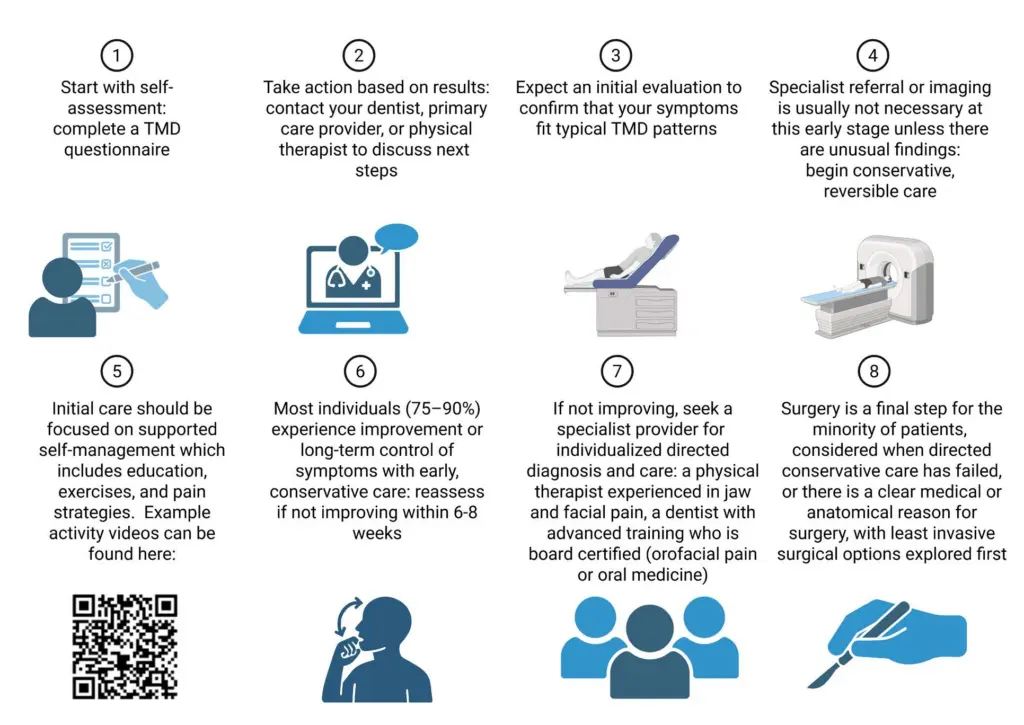
Globally, health systems face similar challenges in delivering effective care for TMDs. In England, the National Health Service recognized the need to strengthen care for individuals with TMDs and released updated, evidence-based guidelines in 2024 (Beecroft et al., 2024), which this discussion paper uses as a model for its proposed care pathway. Similar frameworks have been implemented in Sweden and other countries with universal health systems (Alstergren, 2024). Although developed within different health care systems, these international models reinforce common principles relevant to United States implementation, including early conservative management, coordinated referral pathways, and patient-centered care. A single mandated point of entry into the health care system for patients with TMDs in the United States is unlikely to be feasible since patients frequently self-select their initial clinician. Therefore, care pathways must remain flexible enough to support patients regardless of where they initially seek care. Patients and clinicians require clear guidance regarding safe first steps, indications for escalation, and appropriate referral strategies. A practical, actionable TMD care pathway may help reduce patient harm and improve care coordination when translated into patient-friendly language (Figure 1).
Figure 1 | Patient Infographic Regarding the TMD Care Pathway
SOURCE: Created by the authors.
Four Stages in a TMD Care Pathway
Stage 1. Initial Screening
Providing freely accessible online resources for initial screening in patients experiencing onset of facial pain can help guide patients to appropriate health care clinicians and reduce the burden of navigating early care (Figure 2, see white box). Currently, patients in the United States who experience facial pain symptoms or dysfunction often begin their care journey by searching online for local clinicians or consulting an existing health care professional. Points of entry often include dentists, hospital emergency departments, physical therapists, primary care physicians (PCPs), and otolaryngologists. Most patients can be effectively managed by any of these first-line clinicians with appropriate training. In the United States, patients typically do not require a referral to see these clinicians unless restricted by specific insurance policies.
Figure 2 |TMD care pathway
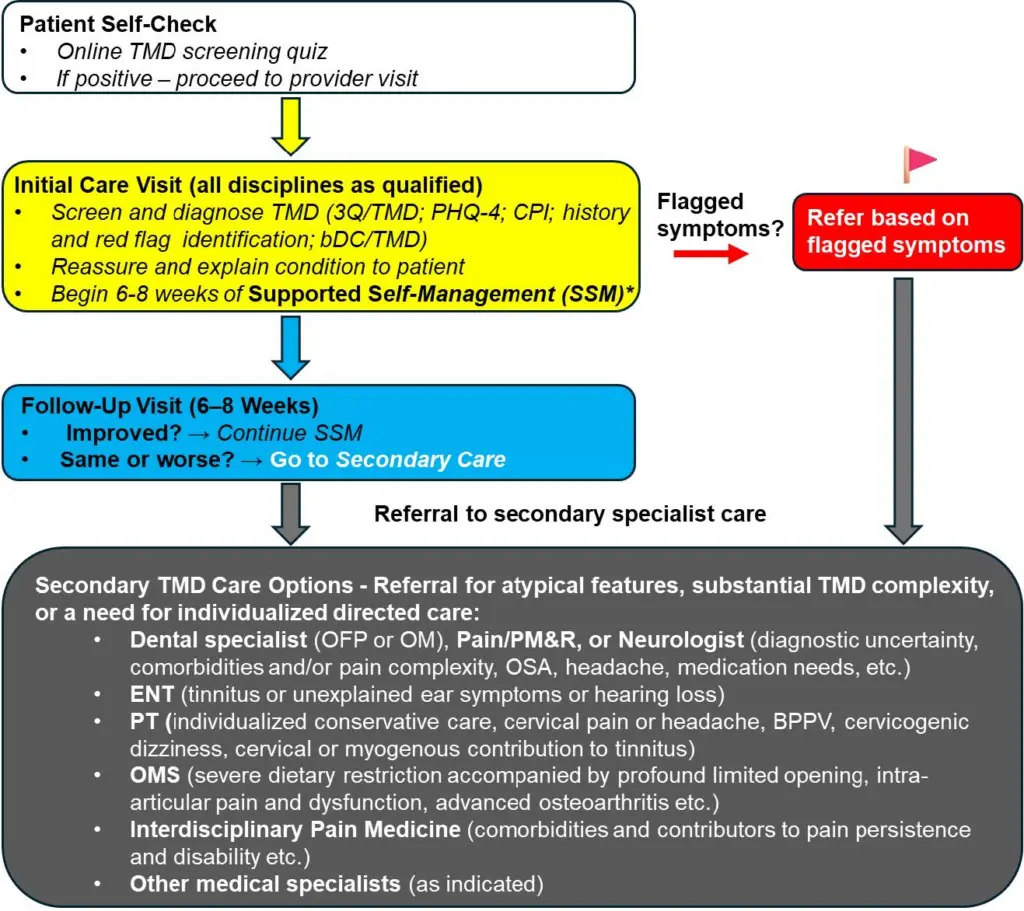
Notes: Care pathway and SSM materials modeled on English National Care pathway (Beecroft et al., 2024). Example of self-supported management materials can be found Beecroft and Durham (2022). Abbreviations: TMD, Temporomandibular Disorders, 3Q/TMD, a three-question screening instrument for identifying painful TMD; PHQ-4, Patient Health Questionnaire 4; CPI, Characteristic Pain Intensity scale; bDC/TMD, the brief Diagnostic Criteria for TMD; SSM, Supported self-management; OFP, orofacial pain; OM, Oral Medicine; PM&R, Physical medicine and rehabilitation; OSA, Obstructive sleep apnea; ENT, ear, nose, and throat physician; PT, physical therapist; BPPV, benign paroxysmal positional vertigo; OMS, Oral and maxillofacial surgeon. SOURCE: Created by the authors.
Stage 2. Initial Clinician Care Visit
Regardless of how a patient accesses care or which clinician they see first, they should receive consistent, evidence-based diagnosis and treatment (Figure 2, see yellow box). Any initial clinician, operating within their scope of practice and training, can utilize a validated screening tool to increase confidence in what is likely a painful TMD and to justify the need for a diagnostic exam. A careful history intake with assessment of red-flag items (e.g., unexplained weight loss, night sweats, prior history of cancer) is needed to confirm that the source of pain or jaw dysfunction is not likely to be tooth related, and to consider conditions that can mimic TMDs given the potential for pathology in the orofacial region (e.g., malignant tumors or bony ankylosis) to present with overlapping symptoms of acute intra-articular pain and dysfunction (see Table 1). Additionally, assessment of medications and their possible side effects that impact oromotor and sensory functions is the first step in an initial care visit for a patient presenting with a possible TMD. Clinicians should be trained to recognize red flags or atypical presentations that may require referral to a specialist or another clinician, with clarity on urgency of referral (Figure 2, see red box; Table 1). In addition to standard musculoskeletal screening questions (George et al., 2018), clinicians should pay specific attention to head and neck-specific concerns that may indicate other potentially serious underlying conditions beyond the typical presentation of TMDs (Table 1).
Patients presenting with head, neck, or jaw complaints for the initial clinician visit (e.g., primary care, dentistry, etc.) should complete a standardized intake to clarify the nature and severity of the condition. To optimize time and efficiency in high-volume settings, standardized screening tools, such as the 3-Question TMD Screen (Lövgren et al., 2018) and the 4-item Patient Health Questionnaire (PHQ-4; Kroenke et al., 2009), should be administered via digital patient portal or by clinical support staff (e.g., medical assistants, nurses, etc). The clinician’s role then shifts to the interpretation of the screening results, followed by a targeted physical examination and patient education.
After initial screening, the next step for the first-contact clinician is to establish a simple diagnosis based on the patient’s history and brief physical examination (Figure 2, see yellow box). In the absence of red flags, routine imaging is not recommended at this stage, unless it is expected to change decision-making for diagnosis or initial management (Bakke et al., 2014; Manfredini et al., 2025; Shahidi et al., 2018). Instead, a careful patient history can be conducted to identify symptom onset, aggravating factors, and elements that may contribute to persistent or complex pain. Tools such as the Temporomandibular Pain Disorder Screening Instrument (Gonzalez et al., 2011), can help to efficiently collect key symptom information, including location of pain, painful joint noises, pain modifying activities, jaw locking, and headache and neck symptoms.
| Red Flag Item | Referral Reccommendation |
|---|---|
| Tooth pain not reproduced with masticatory muscle palpation (rule out dental causes of tooth pain) | Dentist |
| Intraoral lesions including tongue and mucosal lesionsa | Dentist
Oral medicine specialist |
| Lymphadenopathy, face or neck mass/swellinga | Primary care physician |
| Jaw claudication symptomsa | Primary care physician |
| Unilateral headache, flu-like symptoms, vision disturbances, inflammation of temporal artery, and claudication in tongue or muscles of masticationa | Primary care physician |
| History of previous malignant tumor with onset of facial pain or headache | Primary care physician |
| Fever with trismusa | Primary care physician |
| Unexplained weight gain or lossa | Primary care physician |
| Neurological signs/symptoms including acute onset loss of smell or hearing, visual problems, motor or sensory changes in cranial nerve function or progressive neurological deficita | Primary care physician
Neurologist |
| Nasal symptoms including persistent and profuse bleeding or purulent dischargea | Primary care physician
Otolaryngologist |
| Hoarseness of the voice persisting longer than 3 weeks | Primary care physician
Otolaryngologist |
| New onset jaw pain in those taking bisphosphonates or related medicationsa | Primary care physician |
| Concern regarding serious conditions that can masquerade as orofacial musculoskeletal pain (e.g., myocardial infarction)a | Primary care physician |
| Pattern change in an existing headache, or sudden onset of a new headache particularly in anyone over 50 years of age, or posttraumatic headache onseta | Primary care physician
Neurologist |
| Other headache symptoms not precipitated by jaw movements or chewing, or alleviated by management of TMD symptoms | Oral medicine specialist
Neurologist Orofacial pain specialist |
| Severe, stimulus-evoked, short-lasting stabbing pain attacks in the face or other evidence of neuropathic facial pain | Oral medicine specialist
Neurologist Orofacial pain specialist |
Note: aDepending on symptom severity and local access, consider immediate referral to a primary care physician, urgent care setting, or emergency department.
Although comprehensive diagnostic criteria, such as the Diagnostic Criteria for TMD (DC/TMD), are available and typically used by specialists (Schiffman et al., 2014), detailed subtyping is not usually necessary for initial management unless the case is complex or red flags are present, in which case referral to a specialist with advanced training in the diagnosis of TMDs would be warranted (e.g., OFP or OM specialist or PT specialist). For most patients, a broad classification of TMDs as myogenous (i.e., muscle-related), arthrogenous (i.e., joint-related), or mixed (i.e., both muscle and joint) can be sufficient to guide first-line management decisions. A concise initial evaluation can effectively be performed by a trained clinician using the brief DC/TMD (bDC/TMD), which requires approximately five to ten minutes to complete (Durham et al., 2024). This includes assessment of pain-free and maximal mouth opening, presence of joint noises during opening, and palpation of muscles and TMJs with identification of familiar (i.e., recognized by the patient as consistent with their symptoms) facial or headache symptoms during examination consistent with a TMD. This structured approach supports early diagnosis and appropriate triage while minimizing unnecessary imaging or specialist referral.
Identifying possible comorbidities (Box 2), such as migraine, fibromyalgia, connective tissue disorders, autoimmune conditions, and others (e.g., sleep disorders), is also important. These factors may increase condition complexity and indicate the need for secondary referral for management, where active clinician involvement can help a patient navigate their health care needs. In addition to symptom screening, it is also important that a clinician briefly assesses psychosocial factors that may influence prognosis, such as stress, anxiety, and pain intensity (Box 3), as well as the duration of these and other symptoms related to TMD. The PHQ-4 is a four-question tool that broadly screens for depression and anxiety (Kroenke et al., 2009). Each item is scored from 0 to 3 points, yielding a total score of up to 12 points. A total score of 3 or more points on the first two questions suggests anxiety, whereas a total score of 3 or more points on the last two questions suggests depression. Scores of 9 or greater indicate severe distress and should prompt timely clinical follow-up or referral, with same-day urgent referral reserved for suicidal ideation or immediate safety concerns. Otherwise, scores are generally rated as typical (0–2), mild (3–5), moderate (6–8), and severe (9–12). Understanding a patient’s psychosocial status and duration of TMD symptoms can help predict the risk of persistent pain and inform the need for additional referrals or multidisciplinary support (Chuinsiri and Jitprasertwong, 2020).
Box 3 | Screening tools at initial care pathway entry
3-Question TMD Screen (3Q/TMD): A three-question screening instrument for identifying the likelihood of painful TMD (Lövgren et al., 2018)
4-item Patient Health Questionnaire (PHQ-4): A four-question tool that broadly screens for depression and anxiety (Kroenke et al., 2009)
Characteristic Pain Intensity scale: A three-question screening instrument to capture an individual’s average pain intensity over the past 30 days (Von Korff et al., 1992)
Stage 3. Initial Conservative Management
Supported self-management (SSM) is an effective first-line approach for most patients with newly diagnosed TMDs (Figure 2, see Yellow box; Table 2). The goal of SSM is to equip patients with practical strategies to manage their symptoms, reduce pain, and improve function, without the need for immediate specialist intervention. Core components include patient education, instruction in the appropriate use of over-the-counter analgesics, thermal modalities, self-exercise and self-massage activities, advice on diet and nutrition, and instruction on enacting biobehavioral strategies (Durham et al., 2016). Although the comparative effectiveness of these various strategies remains unclear, providing access to high-quality resources, such as videos, handouts, and evidence-based guidance, can significantly enhance a patient’s ability to self-manage their condition (Beecroft and Durham, 2022). To support the effective implementation of the TMD care pathway in the United States, patient- and clinician-facing materials tailored to the local health care context will need to be developed and be easily accessible to all clinicians.
Monitoring, Reassessment, and Decision to Escalate
Following initiation of SSM and conservative-directed care (e.g., physical therapy), the patient’s progress should be actively monitored. Assessment of treatment response and the necessity for escalation should incorporate physical, psychological, and functional outcome measures. At the 6- to 8-week follow-up, the clinician should perform a structured reassessment using standardized patient-reported outcome measures. These include, but are not limited to, re-administering the PHQ-4 (to measure distress), documenting changes in pain intensity (e.g., using a numeric pain rating scale), and objectively measuring changes in maximal mouth opening and symptom reproduction. If pain and disability have failed to improve, or if the patient demonstrates an increase in psychosocial distress (e.g., rising PHQ-4 score), these data serve as the explicit triggers for escalation to Stage 4 (secondary care referral) in order to prevent prolonged, ineffective management.
Table 2 | Key Components of a Supported Initial Self-Management Plan for TMD
| Patient education | Clear and concise explanation of symptoms and etiology using plain, patient-friendly language that promotes comfort and reassurance to empower the patient |
| Analgesics and thermal modalities | Appropriate dosage of over-the-counter nonsteroidal anti-inflammatory medication (ibuprofen) with or without stepwise use of acetaminophen, or thermal agents such as heat/cold for pain reduction or muscle relaxation |
| Self-exercises | Exercises focusing on jaw relaxation, masticatory and cervical muscle inhibition, jaw mobility, and pain reduction |
| Self-massage | Gentle self-massage to the masseter and temporalis to reduce masticatory muscle tone |
| Diet and nutrition | Education on maintaining appropriate hydration and nutrition to promote tissue healing while minimizing stress on muscles and joint structures |
| Biobehavioral strategies | Behavior modification to reduce parafunctional activities such as nail biting and jaw clenching, promote appropriate rest position of the jaw, and improve diaphragmatic breathing |
Note: Freely available patient focused evidence-based materials are available online at Beecroft and Durham (2022).
Source: Created by the authors.
Stage 4. Secondary Care Referral
If a patient does not respond to initial SSM efforts, requires additional directed care support, or would benefit from diagnostic clarification, referral or consultation with specialists or directed care clinicians is indicated (Figure 2, see Gray box). These include dental specialists (OFP or OM specialists), PCPs, rheumatologists, otolaryngologists, neurologists, specialist physical therapists, pain medicine specialists, sleep medicine specialists, dietitians, speech language pathologists, clinical psychologists, and oral maxillofacial surgeons. Clarity regarding underlying comorbidities or contributors to persistent pain may be useful. For example, because central sensitization and widespread pain amplification can contribute to symptom persistence and treatment complexity in some individuals with TMDs, clinicians may consider use of the 9-item Central Sensitization Inventory (CSI-9) as part of secondary screening for patients presenting with widespread pain, multiple comorbid pain conditions, or disproportionate symptom severity (Nishigami et al., 2018). Similarly, assessing fear of movement (kinesiophobia) can be completed using the validated Tampa Scale for Kinesiophobia for TMDs (Visscher et al., 2010). Similarly, given the strong association between TMDs, chronic pain, sleep disturbance, and sleep-disordered breathing, clinicians may also consider brief screening for sleep dysfunction. Poor sleep may contribute to pain amplification, impaired recovery, psychological distress, and reduced treatment response. Simple validated tools, such as the STOP-Bang questionnaire (Chung et al., 2016) or the Pittsburgh Sleep Quality Index (Mollayeva et al., 2016), may help identify patients who would benefit from additional evaluation. In addition to pain intensity assessment, clinicians may consider screening for functional impact and disability using tools such as the Oral Health Impact Profile (Wojszko et al., 2025), the Jaw Functional Limitation Scale (Ohrbach et al., 2008), or the Pain, Enjoyment of Life and General Activity Scale (Krebs et al., 2009).
The described stages are intended to support safe, discipline-agnostic, coordinated, biopsychosocially informed care for patients with TMDs across medical, dental, and allied health settings. Additional implementation work is needed to develop clinician-facing educational materials, patient support resources, and referral infrastructure capable of supporting widespread adoption of the care pathway. Because identifying qualified clinicians remains a major barrier for patients and providers, practical referral resources should be incorporated into implementation efforts for the TMD care pathway (e.g., the American Board of Orofacial Pain directory for locating OFP specialists, the American Academy of Oral Medicine directory for OM specialists, and the Physical Therapy Board of Craniofacial and Cervical Therapeutics professional association directories for physical therapists with advanced training in TMD management).
Stakeholder Perspectives on a TMD Care Pathway: Opportunities and Barriers
The following stakeholder perspectives were gathered during multiple subcommittee meetings that included representatives from medicine, dentistry, allied health, and patients with lived experience of TMDs to better understand whether the care pathway fits their needs and to identify system gaps and barriers to implementation.
TMD Patient Perspectives
Patient participants in forum-related subcommittee discussions noted that development of a coordinated, patient-centered care pathway emphasizing early recognition of symptoms, conservative first-line management, avoidance of unnecessary imaging and invasive procedures, and improved interdisciplinary communication is needed. Patients also endorsed the use of validated screening tools capable of identifying psychosocial distress, red flags, and comorbid conditions requiring escalation or referral. Patients participating in the NASEM TMD Forum emphasized that TMDs frequently coexist with broader medical comorbidities and continue to be managed within fragmented health care systems lacking coordinated interdisciplinary care, which could be addressed with this pathway. Many reported persistent difficulty identifying clinicians with adequate training in evidence-based TMD management and noted that their suffering could have been avoided if their PCPs had received even basic evidence-based education about TMDs. Patients also emphasized that language matters in the care of complex pain disorders like TMDs. Although contemporary evidence supports a multifactorial understanding of TMDs involving musculoskeletal, neurologic, behavioral, and inflammatory contributors, some patients reported that terminology related to “psychosocial” aspects of pain was sometimes interpreted as dismissive or invalidating. Patients emphasized that delayed diagnosis, fragmented care, and stigmatizing communication may contribute to psychological distress, reduced trust in health care systems, and worsening disability.
PCP Perspectives
PCP participants reported that TMDs frequently fall outside routine medical training despite substantial overlap with conditions commonly managed in primary care, including musculoskeletal pain disorders, headache disorders, sleep dysfunction, anxiety, and chronic pain conditions. For example, guidelines for initial management of noncomplex low back pain consistently include avoiding diagnostic imaging unless otherwise indicated, minimizing opioid prescribing, and promoting conservative management (Chou et al., 2007; Qaseem et al., 2020; Qaseem et al., 2017), which aligns with the proposed TMD care pathway. The pathway makes clear that PCPs can play an important role in providing and managing conservative interdisciplinary care for individuals with TMDs as they do with other musculoskeletal pain conditions to improve patient outcomes. For example, the stratification of primary care resources in low back pain care has been shown to improve clinical outcomes and cost-effectiveness (Hill et al., 2008). Involving PCPs early in the TMD care pathway could help reduce unnecessary diagnostic testing and specialist referral by providing evidence-based care on a condition that is not yet adequately taught in medical school or residency settings. Several participants highlighted that integrating TMD education into broader musculoskeletal and pain management curricula may improve implementation feasibility within medical education systems.
PT Perspectives
Physical therapist participants emphasized that TMDs fit naturally within contemporary rehabilitation models focused on conservative management of musculoskeletal pain and functional impairment. They reported that patients with TMDs frequently present with associated cervical dysfunction, postural impairments, headache symptoms, stress-related muscular tension, and movement-related pain. Participants highlighted growing evidence supporting PT interventions including therapeutic exercise, manual therapy, patient education, self-management strategies, and behavioral approaches promoting function and symptom reduction in TMDs (Armijo-Olivo et al., 2016; Herrera-Valencia et al., 2020; McNeely et al., 2006), cervical and myofascial pain (Blanpied et al., 2017; La Touche et al., 2020; Wilhelm et al., 2023), and other pain conditions (Ferro Moura Franco et al., 2021; George et al., 2021; Wang et al., 2024).
Despite its evidence base, utilization of PT care in the United States for individuals with TMDs is not routine; patients are not always made aware of the option to pursue PT, particularly when they initially see a dentist, suggesting a need for improving dental education. The TMD pathway presents an opportunity to address underutilization of PT for individuals with TMDs. Changes in the United States health care system over the past two decades have enabled patients to seek care from a physical therapist without a physician or dentist referral (American Physical Therapy Association, 2017; Hon et al., 2020), and as such, physical therapists are front-line clinicians in care, consistent with the TMD care pathway.
However, PT participants also noted substantial variability in TMD-related education across PT education programs, which should be addressed. Importantly, limited access to specialized physical therapists with experience in TMD management remains a practical implementation barrier for secondary referral, particularly in underserved regions. Physical therapists strongly supported the interdisciplinary care pathway and emphasized the importance of early conservative intervention prior to escalation toward invasive procedures.
Dentistry Perspectives
Dentistry participants acknowledged the historical influence of occlusal and biomechanical models in TMD management and recognized that some outdated approaches continue to persist within portions of clinical practice, although momentum is building within dentistry to improve the care of individuals with TMDs. Dental training accreditation standards for TMDs were approved in 2020 to be implemented by 2022 (Commission on Dental Accreditation, 2020); however, those accreditation standards provide little guidance on curricular scope or competency expectations. Furthermore, the standards do not address the substantial knowledge gap among dentists trained before this change. As a result, dentists trained before 2022 may continue to manage TMDs primarily as structural or occlusal biomechanical problems rather than multifactorial pain disorders (Klasser and Greene, 2009). To safeguard patients and maintain fidelity to the NASEM report (NASEM, 2020), specifically the principle of “First, Do No Harm,” the proposed pathway prioritizes utilizing evidence-based second opinions, informed consent, and avoidance of irreversible, non-evidence-based treatments without clear indications (e.g., aggressive occlusal equilibration, large-scale occlusal reconstruction, or unindicated surgical consultations). The profession must also acquire the competency to counsel patients on the cessation or reversal of prior inappropriate therapies, shifting the standard of care to reflect evidence-based, reversible, and conservative management (Greene, 2025).
General dentists participating in the discussions expressed interest in practical screening tools, simplified management frameworks, and clearer referral pathways and strategies capable of supporting evidence-based decision making in busy practice settings. Participants also acknowledged ongoing confusion among patients regarding differences between recognized dental specialties involved in TMD management and clinicians marketing themselves as “TMJ specialists” without formal specialty recognition or advanced training. They emphasized that additional continuing education opportunities and improved access to interdisciplinary referral networks would likely improve implementation of conservative evidence-based care among dentists.
OFP Specialist Perspectives
OFP specialist participants emphasized that many patients referred to specialty care have already undergone extensive, sometimes irreversible, treatment before receiving evidence-based evaluation. Participants highlighted the importance of establishing consistent front-line screening and conservative management strategies capable of reducing unnecessary procedures and improving early referral for complex cases. OFP clinicians strongly supported inclusion of psychosocial screening, sleep assessment, and multidisciplinary management strategies within the care pathway. They also emphasized the need for improved integration between medicine, dentistry, behavioral health, and rehabilitation disciplines, and improved reimbursement models. Limited specialist workforce capacity remains a significant barrier to timely referral and access to OFP specialist care, and participants further noted that many regions within the United States lack sufficient access to board-certified OFP specialists, increasing the importance of improving competence among front-line clinicians.
To support the implementation of the TMD care pathway, OFP specialists can provide needed leadership in dentistry to define core competencies, promote interdisciplinary collaboration, and advocate for policy changes that improve access to care for patients with TMDs. Additionally, they can play an important role in advocating for changes in medical and dental reimbursement models for evidence-based facial pain, headaches, and care of patients with TMDs.
OM Specialist Perspectives
OM specialist participants emphasized the importance of maintaining vigilance for non-TMD pathology presenting overlapping symptoms, including autoimmune disease, neuropathic pain, mucosal disease, infection, and neoplastic processes. Participants supported the proposed emphasis on red-flag screening, selective imaging, and interdisciplinary referral pathways capable of improving earlier recognition of medically complex presentations. They also highlighted the importance of improving communication between medical and dental providers when managing patients with significant systemic comorbidities.
Between OM and OFP specialists, there is substantial commonality in philosophy, methodology, practical therapeutic tools, and care coordination for TMDs and OFP, including a shared emphasis on comprehensive assessment, conservative management, and interdisciplinary collaboration. However, the limited number of practitioners in both specialties continues to restrict access to care. As with OFP, deficiencies in medical and dental reimbursement models for evidence-based facial pain, TMD care, and other OM services have contributed to the limited workforce, hampering awareness and access.
OMS Perspectives
OMS participants emphasized that surgeons often evaluate patients after prolonged, unsuccessful treatment attempts or when structural pathology, trauma, severe joint degeneration, or surgical indications are suspected. Most OMSs are members of the American Association of Oral and Maxillofacial Surgeons and follow its parameters of care and guidelines for diagnosing and treating TMJ disorders (Bouloux et al., 2025), which provide clear guidance to optimize care and emphasize the use of minimally invasive initial approaches when appropriate. Unlike the initial stages of the TMD care pathway, imaging may be necessary to guide surgical planning in selected presentations involving trauma, inflammatory disease, structural pathology, or progressive dysfunction. However, routine imaging is not recommended for uncomplicated early-stage TMDs unless findings are expected to alter management.
OMS participants generally supported the proposed stepped-care model that emphasizes conservative management prior to surgical escalation, except in cases involving clear structural pathology or urgent indications. Participants highlighted the importance of establishing realistic patient expectations regarding surgical outcomes and acknowledged the need for improved interdisciplinary communication surrounding perioperative management of chronic pain and psychosocial comorbidities.
Interdisciplinary Pain Medicine and Pain Psychology Perspective
Pain medicine clinician participants emphasized that TMDs frequently coexist with broader chronic and overlapping pain conditions (e.g., fibromyalgia, migraine, irritable bowel syndrome, sleep disorders, and central sensitization syndromes). Participants strongly supported integration of biopsychosocial assessment, functional outcome measures, behavioral health support, and conservative multidisciplinary management strategies into early-stage care. Pain medicine specialists also emphasized the importance of avoiding overmedicalization, minimizing unnecessary procedural escalation, and recognizing the role of sleep dysfunction, psychological distress, and pain amplification in persistent TMD symptoms.
Participants felt it was important that interdisciplinary pain medicine be framed as complementary to specialist care among dental and medical teams, not as a replacement. The goal should be coordinated escalation that helps clarify pain mechanisms and comorbidities, optimizes non-invasive treatment, and aligns medical, behavioral, and rehabilitative strategies with explicit goals and time-bound reassessment. Direct referral to interdisciplinary pain medicine is most appropriate for patients with persistent high-impact pain and functional impairment despite appropriate SSM, conservative care, high distress or maladaptive coping, multi-site pain, overlapping pain conditions, or complex medication issues (Dahlhamer et al., 2018). Care should be coordinated with dental specialists, physical therapists, and PCPs, with shared goals and reassessment at defined intervals to avoid prolonged, non productive care drift.
Behavioral Health Perspective
Behavioral health clinician participants emphasized that chronic pain frequently affects emotional well-being, coping ability, sleep quality, social participation, and quality of life. Participants noted that psychological interventions should not be viewed as implying that pain is psychological, but rather as evidence-based strategies that may help patients manage distress, improve coping, and support functional recovery. Behavioral health specialists supported incorporation of psychosocial screening, pain coping education, stress-management strategies, and referral pathways for patients with significant anxiety, depression, trauma histories, or maladaptive pain behaviors. Participants also stressed the importance of clinician communication that validates patient experiences while avoiding stigmatizing language.
Infrastructure Challenges and Implementation Strategies for TMD Care
Cross-Disciplinary and Systemic Barriers
While discipline-specific barriers shape the care of TMDs, broader systemic challenges affect all sectors and can hinder effective, coordinated management (Table 3). Successful implementation of an interdisciplinary TMD care pathway will require coordinated changes across reimbursement systems, referral infrastructure, professional culture, and health care education. Although the proposed pathway is intentionally designed to be flexible and discipline-agnostic, substantial barriers remain.
Table 3 | Potential Barriers and Strategies to TMD Care Pathway Implementation
| Barriers | Strategies |
|---|---|
| Educational and training gaps across disciplines |
|
| Fragmented communication |
|
| Limited availability of clinicians, particularly for specialists |
|
| Insurance and reimbursement structures |
|
Source: Created by the authors.
One major barrier is the absence of integrated referral networks connecting medicine, dentistry, PT, behavioral health, sleep medicine, and specialty TMD care. Patients frequently encounter delays in diagnosis and treatment because clinicians often lack familiarity with available referral resources or appropriate interdisciplinary management strategies. Persistent variability in clinician education and training contributes to inconsistent diagnosis, referral, and implementation of evidence-based care.
In many regions, workforce shortages among clinicians with advanced TMD expertise further limit access to timely care. Telehealth may provide opportunities to improve access to interdisciplinary consultation, patient education, behavioral health support, and specialist triage, particularly in regions with limited specialty access. However, implementation challenges related to reimbursement for telehealth services, licensing, and cross-disciplinary coordination remain unresolved.
Insurance coverage for TMD care in general remains a major implementation challenge. Conservative evidence-based interventions, such as PT, behavioral health support, patient education, and SSM, may receive inconsistent reimbursement, while procedural interventions are often more readily covered. These reimbursement structures may unintentionally incentivize escalation toward invasive treatment before adequate conservative management has occurred. Creating medical and dental benefit pathways, including Medicare Part B and Medicare Advantage pathways where applicable, for evidence-based nonprocedural TMD evaluation, conservative management, care coordination, PT, behavioral health, and medically necessary specialty care is needed.
Participants across disciplines identified persistent fragmentation between medical and dental electronic health record systems as a significant barrier to coordinated care. Limited interoperability may impair communication, duplicate testing, and contribute to inconsistent treatment recommendations.
Educational and training gaps remain pervasive, with most health care clinicians receiving limited instruction on TMDs. Persistent variability in clinician education and training, contributing to inconsistent diagnosis, referral, and implementation of evidence-based care. Professional training programs are already overextended, making the integration of new content, including TMDs, particularly challenging. Despite these barriers, efforts are underway, such as those in the NASEM TMD Forum, to develop clear interprofessional models. Defining minimal core content and competencies that are grounded in evidence-based tools for likely front-line clinicians can help create consistency across training programs. Establishing such educational guidelines would reduce the educational burden on individual professions to develop standards while enhancing collaborative, interdisciplinary care. This aligns with broader national strategies aimed at addressing the pain management crisis in the United States (Institute of Medicine, 2011).
In dental education, the American Academy of Orofacial Pain developed curricular guidelines for predoctoral training in TMDs (AAOP Committee on TMD Predoctoral Education, 2021). However, the extent of adoption across dental schools remains unassessed. Implementation challenges can include limited access to patients with TMDs during training (Fricton et al., 2025; Sangalli et al., 2025). In 2024, the Commission on Dental Accreditation solicited public comment on proposed revisions to accreditation standards, which included a reduction of TMD-related competency requirements (Commission on Dental Accreditation, 2024).
In contrast, no formal predoctoral educational standards or guidelines for TMDs currently exist in medical education. Musculoskeletal medicine itself remains a recognized gap in medical education curricula (DiGiovanni et al., 2016; Institute of Medicine, 2011; Peeler et al., 2024). While content related to TMDs is included in United States entry-level PT curricula, there is significant variability in the depth and type of training provided, leading to inconsistencies in practice, even among board-certified orthopedic PT specialists (Prodoehl et al., 2019; Shaffer et al., 2018). Overall, foundational entry-level training in the care of individuals with TMDs is insufficient across all likely medical, dental, and allied health front-line clinician disciplines.
Post-professional education in the evidence-based diagnosis and management of TMDs is also limited in both quantity and quality. Much of the skill building is limited to short, often weekend courses offered to practicing dentists, that may or may not be grounded in current evidence (Sangalli et al., 2026). In response, recent efforts have been aimed at addressing post-professional knowledge gaps. In 2024, a 5-hour, interactive, open-access, module-based course was released that included patient education materials and preliminary feedback from 30 diverse health care professionals representing dentistry, physician assistant, nursing, and PT (Hawkins et al., 2024). Although promising, this course is one of few available resources and does not provide clinical exposure to patients with TMDs, a potentially important component to improving clinician confidence and competence (Sangalli et al., 2025). Standardized educational competencies, shared terminology, and validated screening tools could improve communication across disciplines and support more consistent early management of TMDs.
Implementation of the proposed care pathway will likely require collaboration among professional organizations, health care systems, educators, insurers, accrediting bodies, and patient advocacy organizations. Participants emphasized that successful implementation depends not only on dissemination of clinical guidelines, but also on development of practical tools capable of supporting real-world workflow integration.
Future Opportunities
Future efforts could prioritize implementation strategies capable of operationalizing interdisciplinary TMD care within real-world health care systems. To strengthen and sustain a universal care model for TMDs, several forward-looking strategies were discussed in the NASEM report (NASEM, 2020), including clarity in defining research priorities, establishing centers of excellence, and developing a patient registry. Specifically related to this care pathway, however, several future opportunities exist. First, improving public awareness around evidence-based TMD care is needed through the creation of modern, accessible, evidence-based educational materials and patient-facing tools that reflect current science, emphasize early recognition and conservative management, and are accessible to people of all ages, health literacy levels, and cultural or linguistic backgrounds. Expanding and updating these communication efforts through digital platforms, educational settings, primary care settings, dental practices, and community organizations would elevate national understanding of TMDs, empower patients to seek appropriate care earlier, and reinforce the legitimacy and complexity of these disorders across medicine and dentistry. Second, evaluating the impact of the care pathway on practice and patient outcomes will be needed, including assessment of long-term patient-reported outcomes associated with conservative and invasive interventions. Integrating emerging biological and clinical research could support the development of validated diagnostic and risk stratification tools, which are currently lacking in TMD care.
Implementing the TMD care pathway across disciplines and evaluating its effectiveness, while elevating public understanding and reducing stigma, will enable consistent, patient-centered management and improve outcomes and quality of life for individuals living with TMDs.
Join the Conversation
Follow us on LinkedIn and Instagram, and share this article (https://nam.edu/perspectives/clinical-path-improving-care-temporomandibular-disorders/)!
References
AAOP (American Academy of Orofacial Pain). 2023. Orofacial pain: Guidelines for assessment, diagnosis, and management, 7th ed., edited by G. D. Klasser and M. Romero Reyes. Chicago: Quintessence Publishing Co, Inc.
AAOP Committee on TMD Predoctoral Education. 2021. Temporomandibular disorders core curriculum for predoctoral dental education: Recommendations from the American Academy of Orofacial Pain. Journal of Oral & Facial Pain and Headache 35(4):271-277. https://doi.org/10.11607/ofph.3073.
Alstergren, P. 2024. What and how? Workflow of the management of joint disorders in the clinical practice. Seminars in Orthodontics 30(3):267-270. https://doi.org/10.1053/j.sodo.2023.11.005.
American Physical Therapy Association. 2017. State of direct access to physical therapist services: A report from the American Physical Therapy Association. Available at: https://www.apta.org/apta-and-you/news-publications/reports/2025/state-of-direct-access-to-physical-therapist-services (accessed 7 July, 2026).
Armijo-Olivo, S., L. Pitance, V. Singh, F. Neto, N. Thie, and A. Michelotti. 2016. Effectiveness of manual therapy and therapeutic exercise for temporomandibular disorders: Systematic review and meta-analysis. Physical Therapy 96(1):9-25. https://doi.org/10.2522/ptj.20140548.
Bakke, M., A. Petersson, M. Wiesel, P. Svanholt, and L. Sonnesen. 2014. Bony deviations revealed by cone beam computed tomography of the temporomandibular joint in subjects without ongoing pain. Journal of Oral & Facial Pain and Headache 28(4):331-337. https://doi.org/10.11607/ofph.1255.
Beecroft, E., and J. Durham 2022. Newcastle Upon Tyne NHS Hospitals foundation Trust TMD resources. Available at: https://www.youtube.com/playlist?list=PL0Zkwya_9eK9dUJbeyARqIxupd8i53EbJ (accessed July 7, 2026).
Beecroft, E., J. Palmer, C. Penlington, L. Avery, V. Aggarwal, M. Chase, S. Davies, B. Gerber, R. Jagger, S. Harrison, M. Horton, L. Jones, A. Kalantzis, S. Lie, G. McKenna, R. McMillan, M. Morton, E. Murphy, T. Renton, T. Thayer, A. Weden, and J. Durham. 2024. Management of painful temporomandibular disorder in adults. Available at: https://pureadmin.qub.ac.uk/ws/portalfiles/portal/569579550/Comprehensive_guideline_Management_of_painful_Temporomandibular_disorder_in_adults_March_2024.pdf (accessed October 17, 2025).
Beecroft, E., C. Penlington, H. Desai, and J. Durham. 2019. Temporomandibular disorder for the general dental practitioner. Primary Dental Journal 7(4):62-70. https://doi.org/10.1177/205016841800700413.
Blanpied, P. R., A. R. Gross, J. M. Elliott, L. L. Devaney, D. Clewley, D. M. Walton, C. Sparks, and E. K. Robertson. 2017. Neck pain: Revision 2017. Journal of Orthopaedic & Sports Physical Therapy 47(7):A1-A83. https://doi.org/10.2519/jospt.2017.0302.
Bodenheimer, T., J. Kucksdorf, A. Torn, and J. Jerzak. 2021. Integrating physical therapists into primary care within a large health care system. The Journal of the American Board of Family Medicine 34(4):866-870. https://doi.org/10.3122/jabfm.2021.04.200432.
Bouloux, G. F., J. Chou, V. DiFabio, G. Ness, D. Perez, L. Mercuri, W. Chung, G. D. Klasser, S. D. Bender, S. Kraus, and C. A. Crago. 2025. Guidelines for the management of patients with orofacial pain and temporomandibular disorders. Journal of Oral and Maxillofacial Surgery 83(9). https://doi.org/10.1016/j.joms.2024.03.018.
Busse, J. W., R. Casassus, A. Carrasco-Labra, J. Durham, D. Mock, J. M. Zakrzewska, C. Palmer, C. F. Samer, M. Coen, B. Guevremont, T. Hoppe, G. H. Guyatt, H. N. Crandon, L. Yao, B. Sadeghirad, P. O. Vandvik, R. A. C. Siemieniuk, L. Lytvyn, B. S. Hunskaar, and T. Agoritsas. 2023. Management of chronic pain associated with temporomandibular disorders: a clinical practice guideline. BMJ 383:e076227. https://doi.org/10.1136/bmj-2023-076227.
Champoux, M., A. Poirier, and C. Hudon. 2025. Roles of physiotherapists in primary care teams: a scoping review BMJ Open 15(2):e092276. https://doi.org/10.1136/bmjopen-2024-092276.
Chou, R., A. Qaseem, V. Snow, D. Casey, J. T. Cross Jr., P. Shekelle, and D. K. Owens. 2007. Diagnosis and treatment of low back pain: A joint clinical practice guideline from the American College of Physicians and the American Pain Society. Annals of Internal Medicine 147(7):478-491. https://doi.org/10.7326/0003-4819-147-7-200710020-00006.
Chuinsiri, N., and P. Jitprasertwong. 2020. Prevalence of self-reported pain-related temporomandibular disorders and association with psychological distress in a dental clinic setting. Journal of International Medical Research 48(9). https://doi.org/10.1177/0300060520951744.
Chung, F., H. R. Abdullah, and P. Liao. 2016. STOP-Bang Questionnaire: A practical approach to screen for obstructive sleep apnea. Chest 149(3):631-638. https://doi.org/10.1378/chest.15-0903.
Commission on Dental Accreditation. (2020). Accreditation standards for dental education programs. American Dental Association. Available at: https://coda.ada.org/standards (accesssed July 7, 2026).
Commission on Dental Accreditation. (2024). Proposed revisions to accreditation standards for dental education programs (Summer 2024 draft for comment). American Dental Association. Available at: https://coda.ada.org/ (accesssed July 7, 2026).
DiCaprio, M. R., A. Covey, and J. Bernstein. 2003. Curricular requirements for musculoskeletal medicine in American medical schools. Journal of Bone and Joint Surgery 85(3):565-567. https://doi.org/10.2106/00004623-200303000-00027.
DiGiovanni, B. F., L. T. Sundem, R. D. Southgate, and D. R. Lambert. 2016. Musculoskeletal Medicine is underrepresented in the American medical school clinical curriculum. Clinical Orthopaedics and Related Research 474:901-907. https://doi.org/10.1007/s11999-015-4511-7.
Do, T. P., A. Remmers, H. W. Schytz, C. Schankin, S. E. Nelson, M. Obermann, J. M. Hansen, A. J. Sinclair, A. R. Gantenbein, and G. G. Schoonman. 2019. Red and orange flags for secondary headaches in clinical practice: SNNOOP10 list. Neurology 92(3):134-144. https://doi.org/10.1212/wnl.0000000000006697.
Durham, J., M. Al-Baghdadi, L. Baad-Hansen, M. Breckons, J. P. Goulet, F. Lobbezoo, T. List, A. Michelotti, D. R. Nixdorf, C. C. Peck, K. Raphael, E. Schiffman, J. G. Steele, W. Story, and R. Ohrbach. 2016. Self-management programmes in temporomandibular disorders: Results from an international Delphi process. Journal of Oral Rehabilitation 43(12):929-936. https://doi.org/10.1111/joor.12448.
Durham, J., T. R. Newton-John, and J. M. Zakrzewska. 2015. Temporomandibular disorders. BMJ 350:h1154. https://doi.org/10.1136/bmj.h1154.
Durham, J., R. Ohrbach, L. Baad-Hansen, S. Davies, A. De Laat, D. G. Goncalves, V. V. Gordan, J. P. Goulet, B. Häggman-Henrikson, M. Horton, M. Koutris, A. Law, T. List, F. Lobbezoo, A. Michelotti, D. R. Nixdorf, J. F. Oyarzo, C. Peck, C. Penlington, K. G. Raphael, V. Santiago, S. Sharma, P. Svensson, C. M. Visscher, I. Yoshiki. and P. Alstergren. 2024. Constructing the brief diagnostic criteria for temporomandibular disorders (bDC/TMD) for field testing. Journal of Oral Rehabilitation 51(5):785-794. https://doi.org/10.1111/joor.13652.
Dworkin, S. F., and L. LeResche. 1993. Temporomandibular disorder pain: Epidemiologic data. In C. S. Stohler & G. Carlson (Eds.), Temporomandibular disorders and related pain conditions. IASP Press.
Elledge, R. O. C., and B. Speculand. 2024. Current thinking in temporomandibular disorders: the science and art behind contemporary management. British Journal of Oral Maxillofacial Surgery 62(8):665-668. https://doi.org/10.1016/j.bjoms.2024.06.008.
Ernstzen, D. V., S. L. Hillier, and Q. A. Louw. 2022. Synthesis of clinical practice guideline recommendations for the primary health care of chronic musculoskeletal pain. Journal of Evaluation in Clinical Practice 28(3):454-467. https://doi.org/10.1111/jep.13644.
Ferro Moura Franco, K., D. Lenoir, Y. R. dos Santos Franco, F. J. Jandre Reis, C. M. Nunes Cabral, and M. Meeus. 2021. Prescription of exercises for the treatment of chronic pain along the continuum of nociplastic pain: A systematic review with meta-analysis. European Journal of Pain 25(1):51-70. https://doi.org/10.1002/ejp.1666.
Fricton, V., N. Larkin, L. Sangalli, J. Prodoehl, W. S. Rayens, and J. Fricton. 2025. Confidence in diagnosing and treating temporomandibular disorders among dental students and faculty following implementation of the revised standards 2-24k: A cross-sectional study. The Journal of Craniomandibular & Sleep Practice 44(2):1-14. https://doi.org/10.1080/08869634.2025.2482265.
Gagnon, R., K. Perreault, S. Berthelot, E. Matifat, F. Desmeules, B. Achou, M. C. Laroche, C. Van Neste, S. Tremblay, J. Leblond, and L. J. Hébert. 2021. Direct-access physiotherapy to help manage patients with musculoskeletal disorders in an emergency department: Results of a randomized controlled trial. Academic Emergency Medicine 28(8):848-858. https://doi.org/10.1111/acem.14237.
García-Azorín, D., J. Abelaira-Freire, N. González-García, E. Rodriguez-Adrada, H. W. Schytz, M. Barloese, Á. L. Guerrero, J. Porta-Etessam, and F. J. Martín-Sánchez. 2022. Sensitivity of the SNNOOP10 list in the high-risk secondary headache detection. Cephalalgia 42(14):1521-1531. https://doi.org/10.1177/03331024221120249.
George, S. Z., J. M. Beneciuk, T. A. Lentz, S. S. Wu, Y. Dai, J. E. Bialosky, and G. Zeppieri Jr. 2018. Optimal Screening for Prediction of Referral and Outcome (OSPRO) for musculoskeletal pain conditions: Results from the validation cohort. Journal of the Orthopaedic & Sports Physical Therapy 48(6):460-475. https://doi.org/10.2519/jospt.2018.7811.
George, S. Z., J. M. Fritz, S. P. Silfies, M. J. Schneider, J. M Beneciuk, T. A. Lentz, J. R. Gilliam, S. Hendren, and K. S. Norman. 2021. Interventions for the Management of acute and chronic low back pain: Revision 2021. Journal of Orthopaedic Sports & Physical Therapy 51(11):CPG1-CPG60. https://doi.org/10.2519/jospt.2021.0304.
Gibbs, A. J., B. Gray, J. A. Wallis, N. F. Taylor, J. L. Kemp, D. J. Hunter, and C. J. Barton. 2023. Recommendations for the management of hip and knee osteoarthritis: A systematic review of clinical practice guidelines. Osteoarthritis and Cartilage 31(10):P1280-P1292. https://doi.org/10.1016/j.joca.2023.05.015.
Gonzalez, Y. M., E. Schiffman, S. M. Gordon, B. Seago, E. L. Truelove, G. Slade, and R. Ohrbach. 2011. Development of a brief and effective temporomandibular disorder pain screening questionnaire: Reliability and validity. Journal of the American Dental Association 142(10):1183-1191. https://doi.org/10.14219/jada.archive.2011.0088.
Greene, C. S. 2025. “The emperor’s new clothes” – Reflections on the ethics of second opinions in the TMD field. The Journal of Craniomandibular & Sleep Practice 43(2):173-174. https://doi.org/10.1080/08869634.2024.2397326.
Hampton, T. 2008. Improvements needed in management of temporomandibular joint disorders. JAMA 299(10):1119-1121. https://doi.org/10.1001/jama.299.10.1119.
Hawkins, J., R. Cervero, and S. J. Durning. 2024. Enhancing temporomandibular disorders education for initial care clinicians through interprofessional education. MedEdPORTAL 20:11467. https://doi.org/10.15766/mep_2374-8265.11467.
Headache Classification Committee of the International Headache Society. 2018. The international classification of headache disorders, 3rd edition. Cephalalgia 38(1):1-211. https://doi.org/10.1177/03331024177382 .
Herrera-Valencia, A., M. Ruiz-Muñoz, J. Martin-Martin, A. Cuesta-Vargas, and M. González-Sánchez. 2020. Effcacy of manual therapy in temporomandibularjoint disorders and its medium-and long-termeffects on pain and maximum mouth opening:A Systematic review and meta-analysis. Journal of Clinical Medicine 9(11):3404. https://doi.org/10.3390/jcm9113404.
Hill, J. C., K. M. Dunn, M. Lewis, R. Mullis, C. J. Main, N. E. Foster, and E. M. Hay. 2008. A primary care back pain screening tool: Identifying patient subgroups for initial treatment. Arthritis Care & Research 59(5):632-641. https://doi.org/10.1002/art.23563.
Hon, S., R. Ritter, and D. D. Allen. 2020. Cost-effectiveness and outcomes of direct access to physical therapy for musculoskeletal disorders compared to physician-first access in the United States: Systematic review and meta-analysis. Physical Therapy & Rehabilitation Journal 101(1):pzaa201. https://doi.org/10.1093/ptj/pzaa201.
Institute of Medicine. 2011. Relieving Pain in America: A Blueprint for Transforming Prevention, Care, Education, and Research. Washington, DC: National Academies Press. https://doi.org/10.17226/13172.
Krebs, E. E., K. A. Lorenz, M. J. Bair, T. M. Damush, J. Wu, J. M. Sutherland, S. M. Asch, K. Kroenke. 2009. Development and initial validation of the PEG, a three-item scale assessing pain intensity and interference. Journal of General Internal Medicine 24(6):733-738. https://doi.org/10.1007/s11606-009-0981-1.
Kreiner, D. S., P. Matz, C. M. Bono, C. H. Cho, J. E. Easa, G. Ghiselli, Z. Ghogawala, C. A. Reitman, D. K. Resnick, W. C. Watters III, T. M. Annaswamy, J. Baisden, W. S. Bartynski, S. Bess, R. P. Brewer, R. C. Cassidy, D. S. Cheng, S. D. Christie, N. B. Chutkan, B. A. Cohen, S. Dagenais, D. E. Enix, P. Dougherty, S. R. Golish, P. Gulur, S. W. Hwang, C. Kilincer, J. A. King, A. C. Lipson, A. J. Lisi, R. J. Meagher, J. E. O’Toole, P. Park, M. Pekmezci, D. R. Perry, R. Prasad, D. A. Provenzano, K. E. Radcliff, G. Rahmathulla, T. E. Reinsel, R. L. Rich Jr, D. S. Robbins, K. A. Rosolowski, J. N. Sembrano, A. K. Sharma, A. A Stout, C. K Taleghani, R. A. Tauzell, T. Trammell, Y. Vorobeychik, and A. M. Yahiro. 2020. Guideline summary review: An evidence-based clinical guideline for the diagnosis and treatment of low back pain. The Spine Journal 20(7):998-1024. https://doi.org/10.1016/j.spinee.2020.04.006.
Kroenke, K., R. L. Spitzer, J. B. Williams, and B. Löwe. 2009. An ultra-brief screening scale for anxiety and depression: The PHQ-4. Psychosomatics 50(6):613-621. https://doi.org/10.1016/S0033-3182(09)70864-3.
La Touche, R., S. Martínez García, B. Serrano García, A. Proy Acosta, D. Adraos Juárez, J. J. Fernández Pérez, S. Angulo-Díaz-Parreño, F. Cuenca-Martínez, A. Paris-Alemany, and L. Suso-Martí. 2020. Effect of manual therapy and therapeutic exercise applied to the cervical region on pain and pressure pain sensitivity in patients with temporomandibular disorders: A systematic review and meta-analysis. Pain Medicine 21(10):2373-2384. https://doi.org/10.1093/pm/pnaa021.
Lin, I., L. Wiles, R. Waller, R. Goucke, Y. Nagree, M. Gibberd, L. Straker, C. G. Maher, and P. P. B. O’Sullivan. 2020. What does best practice care for musculoskeletal pain look like? Eleven consistent recommendations from high-quality clinical practice guidelines: Systematic review. British Journal of Sports Medicine 54(2):79-86. https://doi.org/10.1136/bjsports-2018-099878.
Lövgren, A., H. Parvaneh, F. Lobbezoo, B. Häggman-Henrikson, A. Wänman, and C. M. Visscher. 2018. Diagnostic accuracy of three screening questions (3Q/TMD) in relation to the DC/TMD in a specialized orofacial pain clinic. Acta Odontologica Scandinavica 76(6):380-386. https://doi.org/10.1080/00016357.2018.1439528.
Manfredini, D., and S. Bender. 2024. The professional burden of protecting TMD patients. The Journal of Craniomandibular & Sleep Practice 42(6):639-640. https://doi.org/10.1080/08869634.2024.2375194.
Manfredini, D., B. Häggman-Henrikson, A. Al Jaghsi, L. Baad-Hansen, E. Beecroft, T. Bijelic, A. Bracci, L. Brinkmann, R. Bucci, A. Colonna, M. Ernberg, N. N. Giannakopoulos, S. Gillborg, S. C. Greene, G. Heir, M. Koutris, A. Kutschke, F. Lobbezoo, A. Lövgren, A. Michelotti, D. R. Nixdorf, L. Nykänen, J. F. Oyarzo, M. Pigg, M. Pollis, C. C. Restrepo, R. Rongo, M. Rossit, O. I. Saracutu, O. Schierz, N. Stanisic, M. Val, M. C. Verhoeff, C. M. Visscher, U. Voog-Oras, L. Wrangstål, S. D. Bender, J. Durham, and International Network for Orofacial Pain and Related Disordes Methodology. 2025. Temporomandibular disorders: INfORM/IADR key points for good clinical practice based on standard of care. The Journal of Craniomandibular & Sleep Practice 43(1):1-5. https://doi.org/10.1080/08869634.2024.2405298.
McNeely, M. L., S. Armijo Olivo, and D. J. Magee. 2006. A systematic review of the effectiveness of physical therapy interventions for temporomandibular disorders. Physical Therapy & Rehabilitation Journal 86(5):710-725. https://doi.org/10.1093/ptj/86.5.710.
Merskey, H., and N. Bogduk. 1994. Classification of chronic pain. Descriptions of chronic pain syndromes and definitions of pain terms, 2nd ed. Seattle: International Association for the Study of Pain.
Mollayeva, T., P. Thurairajah, K. Burton, S. Mollayeva, C. M. Shapiro, and A. Colantonio. 2016. The Pittsburgh sleep quality index as a screening tool for sleep dysfunction in clinical and non-clinical samples: A systematic review and meta-analysis. Sleep Medicine Reviews 25:52-73. https://doi.org/10.1016/j.smrv.2015.01.009.
NASEM (National Academies of Sciences, Engineering, and Medicine). 2020. Temporomandibular disorders: Priorities for research and care. Washington, DC: National Academies Press. https://doi.org/10.17226/25652.
NASEM. 2023. Forum on temporomandibular disorders. Available at https://www.nationalacademies.org/our-work/forum-on-temporomandibular-disorders (accessed October, 17 2025).
National Institutes of Health. 1996. Management of temporomandibular disorders: Technology assessment conference statement, April 29-May 1. Available at: https://www.ncbi.nlm.nih.gov/books/NBK15168/ (accessed July 7. 2026).
Nishigami, T., K. Tanaka, A. Mibu, M. Manfuku, S. Yono, and A. Tanabe. 2018. Development and psychometric properties of short form of central sensitization inventory in participants with musculoskeletal pain: A cross-sectional study. PLoS One 13(7):e0200152. https://doi.org/10.1371/journal.pone.0200152.
Ohrbach, R., P. Larsson, and T. List. 2008. The jaw functional limitation scale: Development, reliability, and validity of 8-item and 20-item versions. Journal of Oral & Facial Pain and Headache 22(3):219-230. https://doi.org/10.11607/jofph.22.3.06
Parikh, P., P. Santaguida, J. Macdermid, A. Gross, and A. Eshtiaghi, A. 2019. Comparison of CPG’s for the diagnosis, prognosis and management of non-specific neck pain: A systematic review. BMC Musculoskeletal Disordorders 20:81. https://doi.org/10.1186/s12891-019-2441-3.
Peeler, J., S. Mann, T. Orchard, and J. Yu. 2024. Inadequacies in undergraduate musculoskeletal education-A survey of nationally accredited allopathic medical programs in Canada. American Journal of Physical Medicine & Rehabilitation 103(7):624-631. https://doi.org/10.1097/phm.0000000000002425.
Prodoehl, J., A. Cowley, J. Durham, M. Lodes,B. Rindal, and S. Mackey. 2025. Bridging the medica–dental divide: A public health imperative for temporomandibular disorders. BMC Global and Public Health 3:97. https://doi.org/10.1186/s44263-025-00217-y.
Prodoehl, J., S. Kraus, G. D. Klasser, and K. D. Hall. 2019. Temporomandibular disorder content in the curricula of physical therapist professional programs in the United States. The Journal of Craniomandibular & Sleep Practice 38(6):376-388. https://doi.org/10.1080/08869634.2018.1560983.
Qaseem, A., R. M. McLean, D. O’Gurek, P. Batur, K. Lin, D. L. Kansagara, T. G. Cooney, M. A. Forciea, C. J. Crandall, N. Fitterman, L. A., Hicks, C. Horwitch, M. Maroto, R. M. McLean, R. A. Mustafa, J. Tufte, S. Vijan, and J. W. Williams Jr. 2020. Nonpharmacologic and pharmacologic management of acute pain from non-low back, musculoskeletal injuries in adults: A clinical guideline from the American College of Physicians and American Academy of Family Physicians. Annals of Internal Medicine 173(9):739-748. https://doi.org/10.7326/m19-3602.
Qaseem, A., T. J Wilt, R. M. McLean, M. A. Forciea, T. D. Denberg, M. J. Barry, C. Boyd, R. D. Chow, N. Fitterman, R. P. Harris, L. L. Humphrey, and S. Vijan. 2017. Noninvasive treatments for acute, subacute, and chronic low back pain: A clinical practice guideline from the American College of Physicians. Annals of Internal Medicine 166(7):514-530. https://doi.org/10.7326/m16-2367.
Sangalli, L., W. S. Rayens, C. M. Sawicki, D. Tuason, A. H. Babiloni, J. Fricton, and J. Prodoehl. 2025. Higher confidence levels in temporomandibular disorders among predoctoral students with clinical patient exposure: A national-based cross-sectional study. European Journal of Dental Education 30(2):471-484. https://doi.org/10.1111/eje.13138.
Sangalli, L., C. M. Sawicki, J. Fricton, H. J. Haering, and J. Prodoehl. 2026. Current status of temporomandibular disorders education in US predoctoral dental curricula: A nationwide survey. The Journal of Craniomandibular & Sleep Practice 44(2):1-12. https://doi.org/10.1080/08869634.2025.2505784.
Schiffman, E., R. Ohrbach, E. Truelove, J. Look, G. Anderson, J. PL Goulet,T. List, P. Svensson, Y. Gonzalez, F. Lobbezoo, A. Michelotti, S. L. Brooks, W. Ceusters, M. Drangsholt, D. Ettlin, C. Gaul, L. J. Goldberg, J. A. Haythornthwaite, L. Hollender, R. Jensen, M. T. John, A. De Laat, R. de Leeuw, W. Maixner, M. van dr Meulen, G. M. Murray, D. R. Nixdorf, S. Palla, A. Petersson, P. Pionchon, B. Smith, C. M Visscher, J. Zakrzewska, and S. F. Dworkin. 2014. Diagnostic Criteria for Temporomandibular Disorders (DC/TMD) for clinical and research applications: Recommendations of the International RDC/TMD Consortium Network and Orofacial Pain Special Interest Group. Journal of Oral & Facial Pain and Headache 28(1):6-27. https://doi.org/10.11607/jop.1151.
Shaffer, S. M., S. H. Stuhr, P. S. Sizer, C. A. Courtney, and J. Brismee. 2018. The status of temporomandibular and cervical spine education in post-professional physical therapy training programs recognized by member organizations of IFOMPT: An investigation of didactic and clinical education. Journal of Manual & Manipulative Therapy 26(2):102-108. https://doi.org/10.1080/10669817.2017.1422614.
Shahidi, S., P. Salehi, P. Abedi, M. Dehbozorgi, S. Hamedani, and N. Berahman. 2018. Comparison of the bony changes of TMJ in patients with and without TMD complaints using CBCT. Journal of Dentistry 19(2):142-149.
Slade, G. D., R. B. Fillingim, A. E. Sanders, E. Bair, J. D. Greenspan, R. Ohrbach, R. Dubner, L. Diatchenko, S. B. Smith, C. Knott, and W. Maixner. 2013. Summary of findings from the OPPERA prospective cohort study of incidence of first-onset temporomandibular disorder: Implications and future directions. The Journal of Pain 14(12 Suppl):T116-T124. https://doi.org/10.1016/j.jpain.2013.09.010.
Slade, G. D., R. Ohrbach, J. D. Greenspan, R. B Fillingim, E. Bair, A. E. Sanders, R. Dubner, L. Diatchenko, C. B. Meloto, S. Smith, and W. Maixner. 2016. Painful temporomandibular disorder: Decade of discovery from OPPERA studies. Journal of Dental Research 95(10):1084-1092. https://doi.org/10.1177/0022034516653743.
Story, W. P., J. Durham, M. Al-Baghdadi, J. Steele, and V. Araujo-Soares. 2016. Self-management in temporomandibular disorders: A systematic review of behavioural components. Journal of ORal Rehabilitation 43(10):759-770. https://doi.org/10.1111/joor.12422.
Stowell, A. W., R. J. Gatchel, and L. Wildenstein. 2007. Cost-effectiveness of treatments for temporomandibular disorders: Biopsychosocial intervention versus treatment as usual. Journal of the American Dental Association 138(2):202-208. https://doi.org/10.14219/jada.archive.2007.0137.
Visscher, C. M., R. Ohrbach, A. J. van Wijk, M. Wilkosz, and M. Naeije. 2010. The Tampa Scale for Kinesiophobia for Temporomandibular Disorders (TSK-TMD). Pain 150(3):492-500. https://doi.org/10.1016/j.pain.2010.06.002.
Von Korff, M., J. Ormel, F. J. Keefe, and S. F.Dworkin. 1992. Grading the severity of chronic pain. Pain 50(2):133-149. https://doi.org/10.1016/0304-3959(92)90154-4.
Wang, X. Q., Y. L. Wang, J. Witchalls, J. Han, Z. J. Zhang, P. Page, Y. Zhu, C. Stecco, J. H. Lin, D. El-Ansary, Q. S. Ma, Q. Qi, J. S. Oh, W. M. Zhang, A. Pranata, L. Wan, K. Li, M. Ma, L. R. Liao, Y. L. Zhu, J. W. Guo, and P. J. Chen. 2024. Physical therapy for acute and sub-acute low back pain: A systematic review and expert consensus. Clinical Rehabilitation 38(6):715-731. https://doi.org/10.1177/02692155241229398.
Wilhelm, M., J. Cleland, A. Carroll, M. Marinch, M. Imhoff, N. Severini, and M. Donaldson. 2023. The combined effects of manual therapy and exercise on pain and related disability for individuals with nonspecific neck pain: A systematic review with meta-analysis. Journal of Manual & Manipulative Therapy 31(6):393-407. https://doi.org/10.1080/10669817.2023.2202895.
Wojszko, Ł., K. Banaszek, O. Gagacka, and J. Bagińska. 2025. Oral Health Impact Profile (OHIP) as a tool for the assessment of the oral health-related quality of life—A scoping review. Dentistry Journal 13(11):490. https://doi.org/10.3390/dj13110490.