
Action Collaborative on Combatting Substance Use and Opioid Crises
The substance use crisis is complex. Together, we can overcome it.

About the Program
To improve coordination and accelerate the pace of change, the National Academy of Medicine has partnered with more than 80 organizations to form the Action Collaborative on Combatting Substance Use and Opioid Crises. This initiative brings together key stakeholders from the public, private, and nonprofit sectors to collaboratively address critical issues posed by addiction.
The Action Collaborative is committed to proactively driving structural change by developing, curating, and implementing comprehensive, multi-sector solutions designed to reduce substance misuse and improve outcomes for individuals, families, and communities affected by addiction.
Solving this crisis demands a collaborative effort. No single organization, government agency, or sector possesses the necessary expertise and resources to tackle this complex public health crisis alone. By joining forces, we can overcome the challenges of addiction and pave the way for a healthier and safer future for all.
A National Crisis
Every day, an estimated 260 Americans lose their lives to drug-related overdoses, leaving families and communities across the nation devastated.
While the substances involved continue to change, the overdose crisis persists.
To effectively address this evolving public health challenge, our strategies and approaches must also change.
Important Definitions
These are guiding definitions that characterize our work, not official definitions of the NAM.
Substance Misuse
The use of drugs (including opioids), alcohol, or other substances in ways that can adversely affect an individual's health and well-being.
Substance Use Disorder
A treatable health condition marked by challenges in managing substance use despite harmful consequences that affect a person's well-being and quality of life.
Substance Use Crisis
A critical public health challenge characterized by escalating rates of substance misuse and overdose deaths, causing significant health, social, and economic harms for individuals, families, and communities, such as the opioid crisis.
Stigma
Negative societal, structural, and self-imposed beliefs, attitudes, and practices that isolate, shame, and discriminate against people facing substance misuse challenges, impacting their access to treatment, recovery, and support services.
Program Phases
Our Approach
By taking a comprehensive and adaptive approach, incorporating ongoing research, improving access to prevention and treatment, collaborating across sectors, and conducting meaningful community engagement to support those affected by addiction, we can change the course of this devastating crisis, save lives, and forge a healthier future for our nation.
Phase I
In Phase I (2018–2020), the Action Collaborative convened over 60 key entities to address some of the highest-priority elements in the nation’s response to the opioid crisis, including: health professional education and training; pain management guidelines and evidence standards; prevention, treatment, and recovery services; and research, data, and metrics needs. In addressing these focus areas, the Action Collaborative developed tools and resources that: strengthened the continuum of health professional education to prepare clinicians to effectively manage pain and treat opioid use disorder (OUD); highlighted best practices, research gaps, and future priorities for improving pain management practices; identified priorities to support prevention, treatment, and recovery services and helped prepare the nation’s health system to better meet the needs of individuals with OUD; and supported communities and individuals experiencing addiction and pain throughout the COVID-19 pandemic.
Phase II
In Phase II (2020–2022), the Action Collaborative continued to build on its focus areas from Phase I while evolving to address the changing crisis. The Action Collaborative developed a wide range of products, including publications, podcasts, patient-centered resources, and frameworks while also holding strategic convenings such as webinars, workshops, and thematic meetings. Together, the products and convenings from Phase II advanced progress across the Action Collaborative’s focus areas, including challenges posed by COVID-19. The Action Collaborative also began to expand its work to include substances beyond opioids in response to the growing impact of fentanyl and illicit drugs on the overdose crisis. The Action Collaborative’s work informed federal priorities, advanced national research initiatives, supported health system change, and positioned the Action Collaborative to continue leading a unified systems response to the substance use crisis.
Phase III
During Phase III (2022–present), the Action Collaborative is focused on addressing the evolving nature of the substance use and opioid crisis and leading action that will create a sustainable response into the future. To achieve its goals, the Action Collaborative’s Phase III strategy focuses on advancing health equity, catalyzing data-driven implementation efforts, and developing a framework to address future substance use crises. In Phase III, the Action Collaborative will operationalize its work through three interrelated working groups: education, practice, and health systems; prevention, data, and research; and substance use disorder framework.

Telehealth Agenda
Integrating Telehealth and Traditional Care in Chronic Pain Management and Substance Use Disorder Treatment
An Action Agenda for Building the Future State of Hybrid Care
Mapping Our Impact
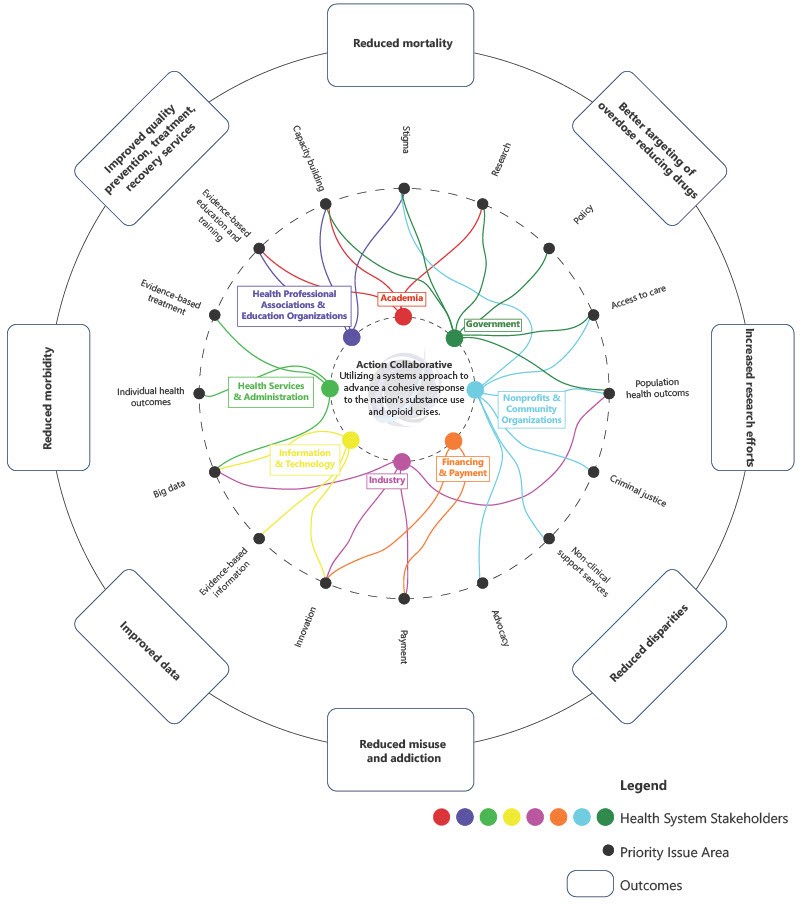
Systems and Impact Maps
To demonstrate and track impact, we are mapping how the Action Collaborative is driving systems change, contributing to the field, and making a difference. The two maps illustrate the direct impacts we are having through our work products and activities, as well as the critical role the Action Collaborative plays in fostering a coordinated and cohesive systems response to the substance use crisis.
Latest Perspectives
Latest Products
Program Team
Optional description copy
Leadership

Staff

Sponsors
The Action Collaborative serves as a neutral platform through which to facilitate dialogue and discussion among representatives from multiple sectors around topics of mutual interest and concern. Individual participating members of the Action Collaborative on Combatting Substance Use and Opioid Crises have disclosed any perceived or actual interests (financial, organizational, professional, or personal in nature) relevant to the activities of the Action Collaborative. Summaries of relevant interests reported can be found here.
Contact Information
Questions?
Contact us at [email protected].
