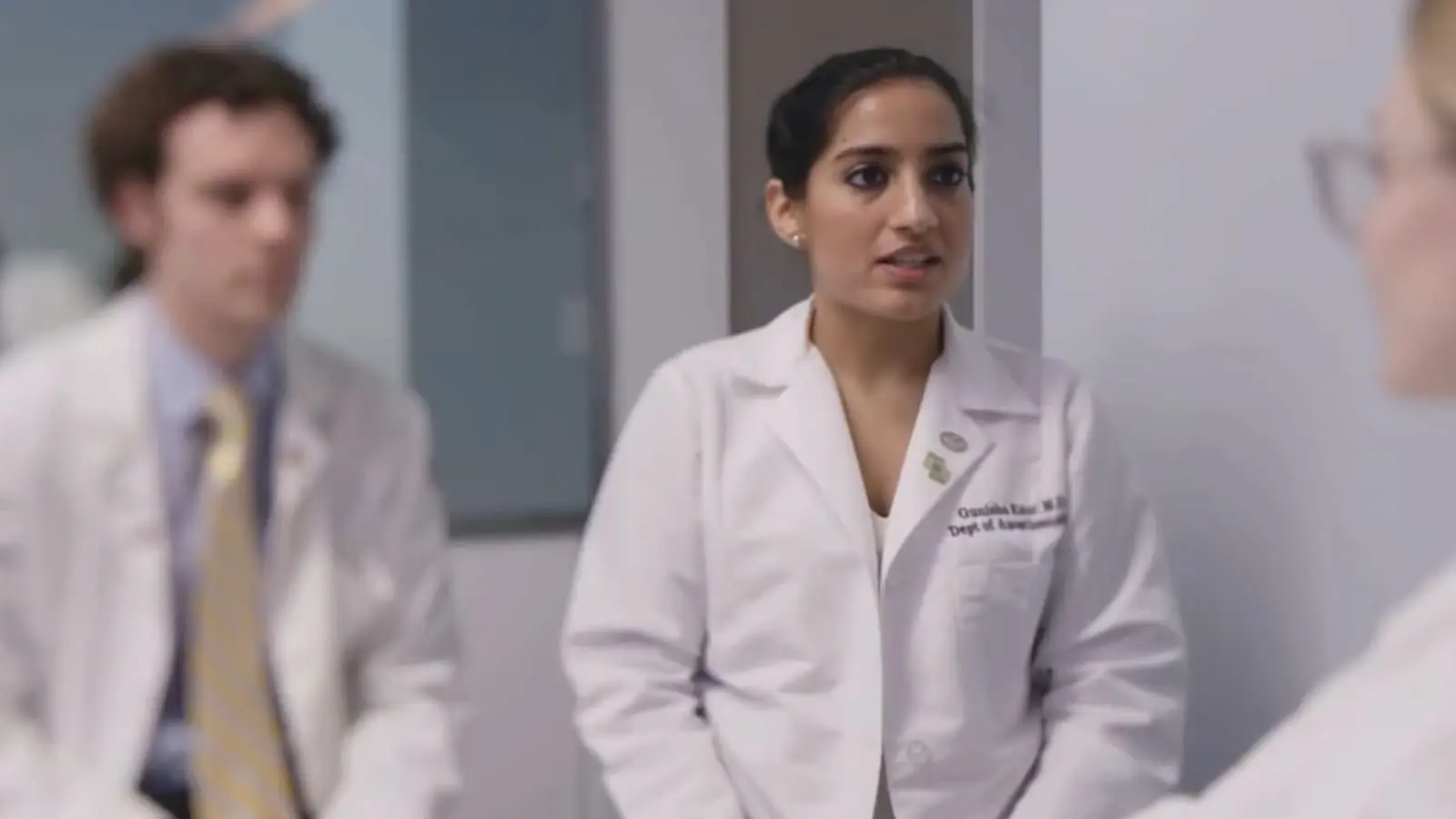
Photo: PBS, via WSKG
Anesthesiologist and human rights researcher Dr. Gunisha Kaur is helping to redefine whole-person care, from the operating room to global maternal health.
By Jamie Durana
For Gunisha Kaur, medicine and human rights have never been separate pursuits. Rather, they’re parts of a whole: inextricably linked pieces that can define the course of a person’s life.
“To me, they were always hand in hand,” she says. “I’ve never seen them as two separate things. I’ve always seen them as one calling, all in the service of caring for people.”
An anesthesiologist and human rights researcher at Weill Cornell Medicine, Kaur is Salvatore Family Medical Director of the Weill Cornell Center for Human Rights. Her career philosophy centers on her patients’ health and the fullness of their lived experiences. In May 2026, Kaur was appointed to the U.S. Commission on International Religious Freedom.
“What drew me to medicine is caring for other human beings,” she says. “From the way I was raised, my culture, and who I am as a person, that feels really important and really good.”
She graduated from Weill Cornell Medical College and completed her training in anesthesiology at Weill Cornell Medical College/New York Presbyterian Hospital, where she began to see firsthand how clinical care intersected with broader social realities.
In anesthesiology—the medical specialty focused on caring for patients before, during, and after surgery—the impact of care can be immediate. “You can lower blood pressure instantly. You can bring it up instantly,” she explains. “You can have very immediate effects that make people feel better and improve their health.”
But what drew her most strongly to the specialty was its breadth. “As an anesthesiologist, you take care of the whole person,” she says. In the pre-op area, she often meets a patient at their most vulnerable as they prepare to undergo a procedure. As an anesthesiologist, she can offer physical and emotional care, reassuring them: “It’s going to be OK. We’re going to take really good care of you.”
For Kaur, taking care of the whole person, to know them and learn what they need, is a gift. That holistic view of medicine has shaped her work, both in the clinical setting and in her research.
Clinical Care Meets Reality
Early in her clinical career, Kaur began to recognize the systemic forces shaping her patients’ health.
“These days talking about social determinants of health or the whole person is common, but that’s always been obvious to people who care for other human beings,” she says.
If a patient with high blood pressure cannot access their prescribed medication, their health is at risk. If a woman who just gave birth lacks health insurance or access to care, her health and her child’s health are endangered.
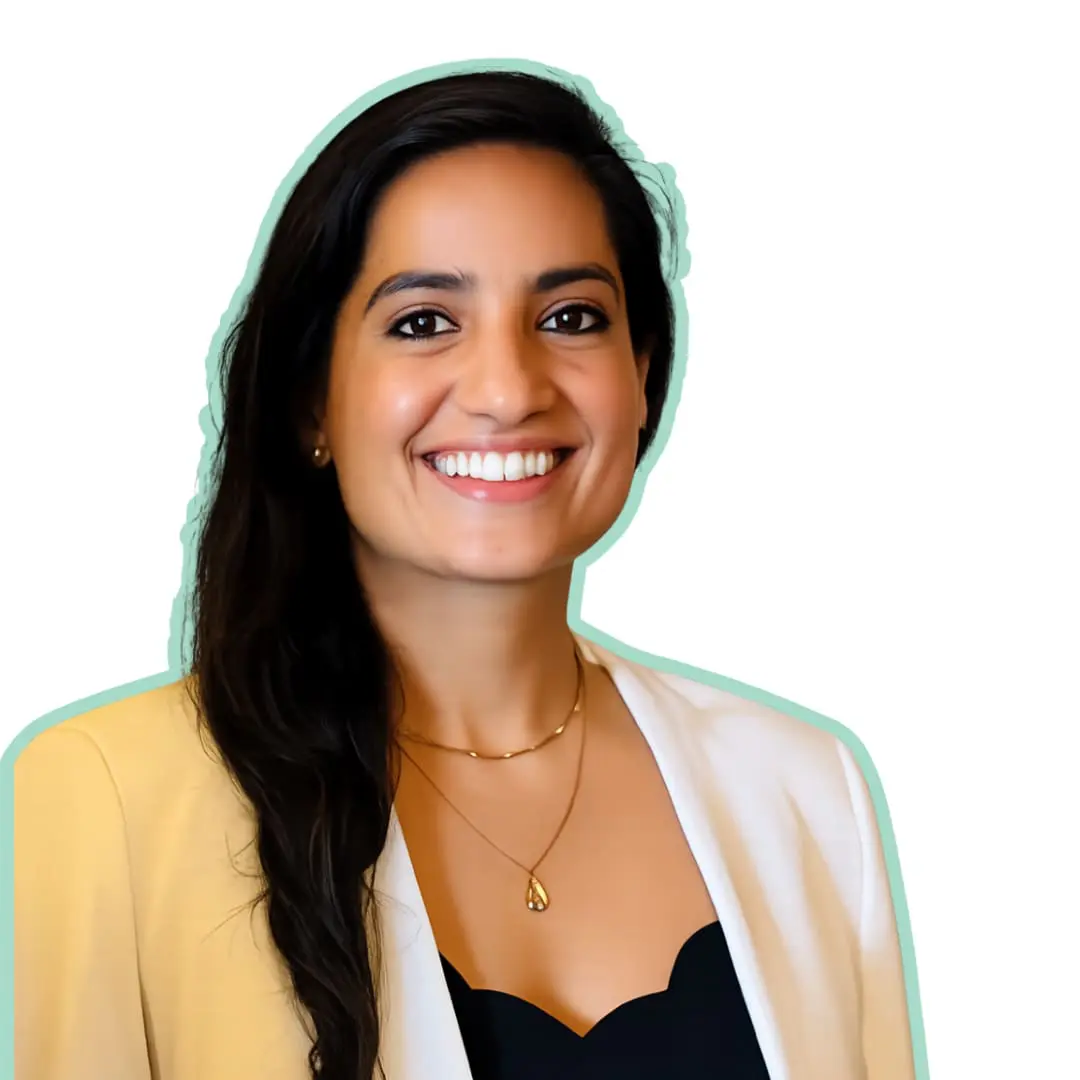
Photo: Gunisha Kaur
“You can’t unsee that somebody who has hypertension and no access to insurance is not going to get their hypertension managed, no matter how many times they see a clinician,” she says. “Once you realize that, once you see it, it’s hard to ignore.”
For Kaur, these realizations were not a departure from medicine but an extension of it. The deep trust patients place in clinicians—by sharing their fears, histories, and intimate details—comes with responsibility.
Health care professionals, Kaur argues, are uniquely positioned to understand how the effects of structural inequities manifest in the human body.
Joining the Emerging Leaders in Health and Medicine
In recognition of her interdisciplinary work, Kaur was selected as a National Academy of Medicine (NAM) Emerging Leader in Health and Medicine Scholar in 2022, part of a three-year program designed to engage early- and mid-career professionals in collaboration with the NAM and its members.
Launched in 2016, the Emerging Leaders Program brings together scholars across biomedical science, health care delivery, health policy, and population health to contribute to NAM initiatives and build collaborative networks.
For Kaur, who served as Chair of the Forum in her final year, the program shows that major institutions are increasingly recognizing the need to integrate clinical expertise with broader systems thinking.
“The Academies are in a really unique place to highlight that,” she says. “We’ll look back in 20 years and wonder why everybody wasn’t doing this.”
A Catalyst for Digital Innovation
Kaur’s integrative approach to medicine and human rights also earned her a 2023 Catalyst Award through the NAM Healthy Longevity Global Competition, a worldwide initiative designed to foster and accelerate innovations that improve healthy years of life.
Digital Solutions to Reduce Maternal Morbidity and Mortality in Refugee Women, the award-winning project she developed in collaboration with colleagues at Weill Cornell Medicine, addresses a critical gap in maternal health among refugee populations.
Pregnant refugee women face elevated risks of gestational hypertension and preeclampsia. Barriers like limited access to health systems, legal constraints, and fear of institutional engagement can delay diagnosis and treatment.
Kaur and her team developed a customized digital health platform that integrates wearable monitoring with a mobile application. The system is designed to detect early markers of risk for hypertensive disorders during pregnancy using remote data collection and machine learning models, with the potential for broader deployment in humanitarian settings.
The project reflects her broader philosophy: care must meet patients where they are, especially when traditional systems fail to do so.
The Patience to Create Change
Kaur emphasizes that meaningful change requires patience.
“As a physician, you want to fix things,” she says. “You want to make somebody better, and you can’t always do that.”
Her human rights research often documents the health effects of trauma, persecution, and displacement: chronic pain, cardiovascular disease, and mental health conditions, among other impacts. The impulse to intervene is strong, but she stresses that research must be rigorous and evidence must be available before policy or large-scale practice can be changed to improve patients’ lives.
“You have to do the research, prove that something’s going to work before you intervene,” she says. “You can’t always fix it.”
That tension between urgency and building a body of evidence defines much of her work. Clinical care informs research questions. Research findings, in turn, can inform broader-level changes.
Looking Forward
Across the health field, Kaur says there is increasing recognition that there are systematically underserved populations.
“There are people who are excluded from the system,” she says. “We need to do better.”
For Kaur, the future of medicine depends on embracing and understanding the full biopsychosocial context—the biological, psychological, and social factors that influence health— and designing systems that address inequities rather than ignore them.
Kaur says that approach is not separate from medicine.
“I really think that’s the responsibility,” she says. And it’s a responsibility health care providers are uniquely qualified to fulfill.
As an anesthesiologist, Kaur stabilizes patients in moments of acute vulnerability. As a human rights researcher, she applies that same whole-person lens beyond the bedside: working to strengthen and repair the systems that shape health long before, and after, a patient goes to the doctor.
The comments of Gunisha Kaur included in this article are her own views and do not necessarily reflect the views of the Commission.
Read the latest NAM feature stories.
Jamie Durana is a writer and editor currently serving as the Associate Director of Storytelling at the Association of Science and Technology Centers.