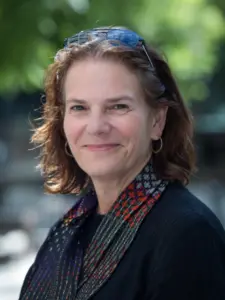
Kristine Yaffe
The National Academy of Medicine (NAM) today announced that Kristine Yaffe is the recipient of the 2026 Rhoda and Bernard Sarnat International Prize in Mental Health for her pioneering research on cognitive aging and dementia prevention, including her landmark contributions to understanding modifiable risk factors for cognitive decline and dementia. The award, which recognizes Yaffe’s achievements with a medal and $20,000, will be presented at the NAM’s Annual Meeting on Oct. 18. Yaffe is Scola Endowed Chair, Epstein Endowed Chair, and vice chair and distinguished professor of psychiatry, neurology, and epidemiology at the University of California, San Francisco.
Spanning more than two decades, Yaffe’s research has helped redefine dementia as a condition for which prevention may be possible, rather than an inevitable consequence of aging. Yaffe’s research was among the earliest to identify associations between cognitive decline and dementia and a broad range of potentially modifiable factors, including physical activity, sleep disorders, post-traumatic stress disorder, cardiovascular health, and metabolic syndrome. Yaffe also led the first U.S.-based, multidomain, randomized controlled trial that tested whether targeting modifiable risk factors could protect brain health and delay cognitive decline in older adults. The National Institutes of Health-funded trial provided evidence supporting risk-factor reduction as a strategy for dementia prevention.
In addition to her research, Yaffe founded and directs the Memory Evaluation Clinic at the San Francisco VA Health Care System, a multidisciplinary center that is an important training site for clinicians and researchers in geriatric medicine, geriatric psychiatry, neurology, and psychology. She has also held leadership roles in national and international efforts focused on healthy brain aging and dementia prevention, including previous service on advisory committees for the Alzheimer’s Association and the Council of the German Center for Neurodegenerative Diseases. She currently serves as chair of the Global Council on Brain Health’s governance committee and is a founding faculty member of the UCSF’s Global Brain Health Institute.
“Dr. Yaffe’s work has fundamentally changed how the medical and scientific communities understand dementia prevention,” said Monica M. Bertagnolli, president of the National Academy of Medicine. “By bringing together neurology, psychiatry, epidemiology, and public health, she has translated rigorous research on modifiable risk factors into evidence that can help shape prevention strategies and improve brain health across populations.”
Cross-disciplinary mentorship and career development remain central to Yaffe’s work. Her research trainees comprise 27 predoctoral students, 60 postdoctoral fellows, and 38 junior faculty, and she has served as a primary or co-mentor on 36 career development awards.
Elected to the NAM in 2019, Yaffe has been honored for her contributions by the American Academy of Neurology with the Potamkin Prize as well as the American Association for Geriatric Psychiatry’s Distinguished Scientist Award and the National Institutes of Health’s Robert S. Gordon Jr. Lectureship Award in Epidemiology. In addition, she was the first female recipient of the U.S. Department of Veterans Affairs’ John B. Barnwell Award for achievement in clinical research.
Since 1992, the Rhoda and Bernard Sarnat International Prize in Mental Health has been presented to individuals, groups, or organizations that have demonstrated outstanding achievement in improving mental health. The prize recognizes — without regard for professional discipline or nationality — achievements in basic science, clinical application, and public policy that have led to progress in the understanding, etiology, prevention, treatment, or cure of mental disorders, or to the promotion of mental health. As defined by the nominating criteria, the field of mental health encompasses neuroscience, psychology, social work, nursing, psychiatry, and advocacy.
The award is supported by an endowment created by Rhoda and Bernard Sarnat of Los Angeles. Rhoda Sarnat was a licensed clinical social worker, and Bernard Sarnat was a plastic and reconstructive surgeon and researcher. The Sarnats’ concern about the destructive effects of mental illness inspired them to establish the award. This year’s selection committee was chaired by Michelle Monje, Milan Gambhir Professor of Pediatric Neuro-oncology and professor (by courtesy) of neurosurgery, pediatrics, pathology, and psychiatry and behavioral sciences, Stanford Medicine.